
shop of Ingredients & Seasonings
44件Please note that business hours and regular holidays may have changed.
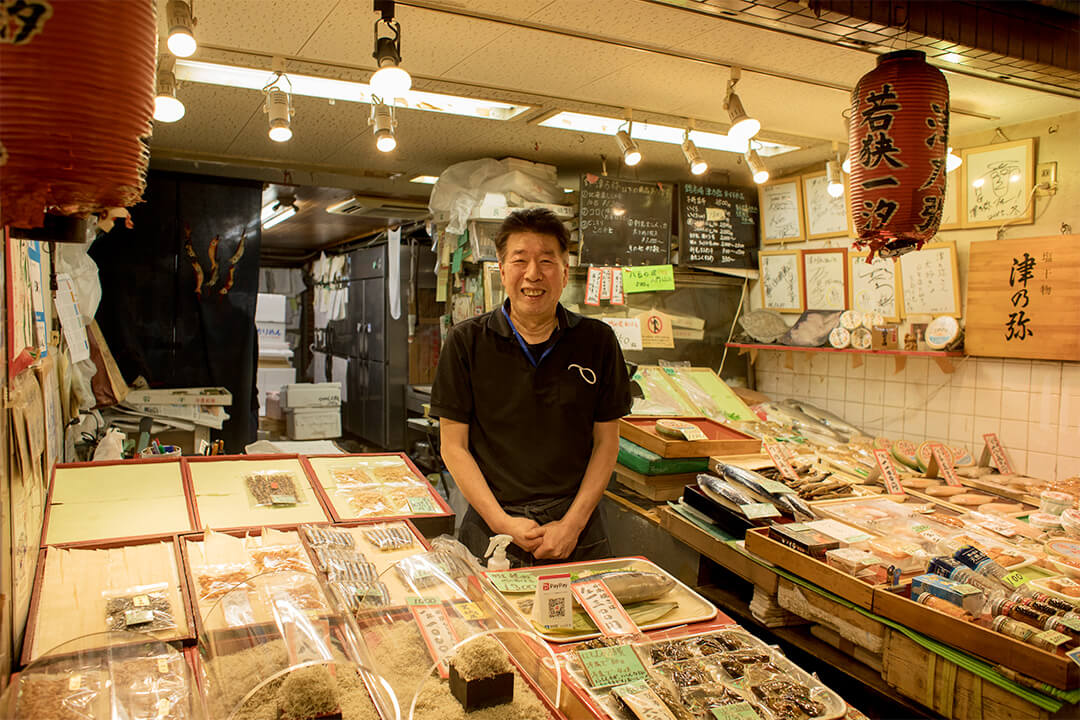
Tsunoya
With the motto of "always procuring fish in the best condition," this store has been in operation since 1928. It is now run by its third-generation owner and has been in business for over 90 years. They deal in salted and dried fish, and their main products are chirimenjako (dried baby sardines), guji (tilefish), and overnight-dried flounder and barracuda. They are especially particular about Wakasa seafood and delicacies such as heshiko (fermented fish) and Wakasa flounder.
- Wakasa
Minoyoshi
In a word, Minoyoshi is a cereal store, but that does not describe it wholly. It has beans such as black soya beans and azuki beans meant to be cooked at home. It has confectionery ingredients such as Wasanbon sugar and kanbaiko rice flour that are used in Japanese confectionery shops. It also has dried bracken fern starch and frozen konjac jelly used in kaiseki cuisine for special tea ceremonies. There are also a variety of items that, at first glance, even locals wonder what they are used for.
- Beansand Cereals

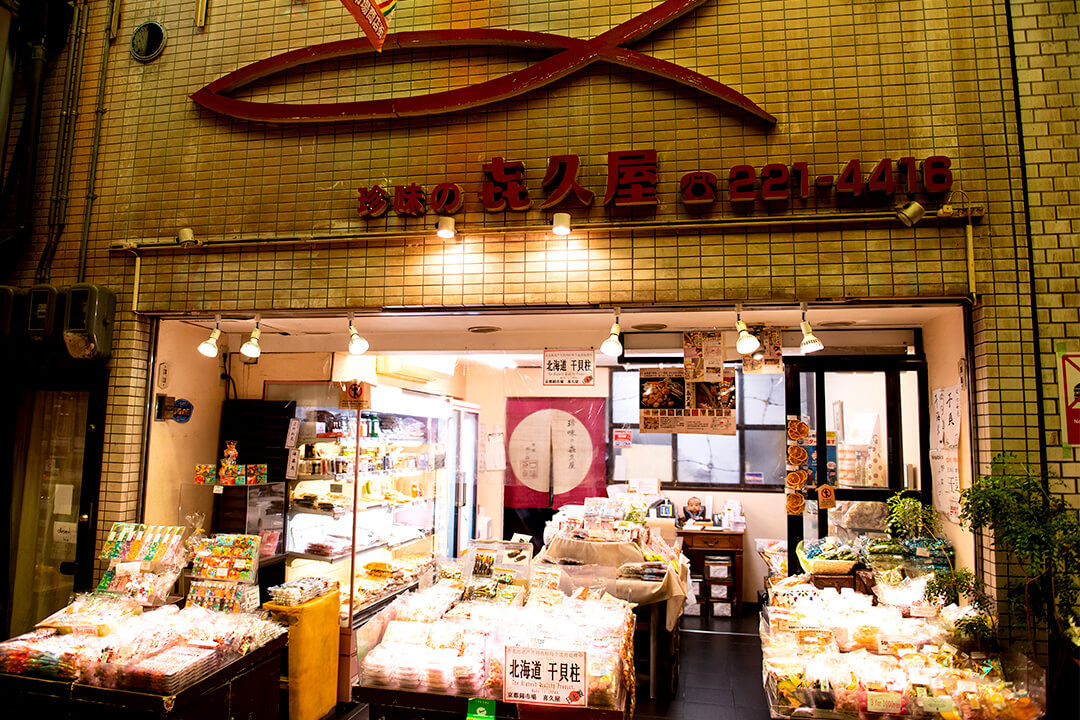
Kikuya
As one would expect from a Nishiki Market delicacy store, Kikuya has shelves after shelves of unique foods. There are many rare items, and even just looking through the shelves and refrigerators is exciting. There are more than 400 items. Not only are there seafood delicacies, such as karasumi (dried salted mullet roe pouch) and sea urchin, but also frozen foods, ingredients for tea ceremonies, nuts, dried fruits, etc. You will find a wide range of rare and tasty products. Kikuya is not only a shop with a wide variety of snacks that go well with drinks. It is also a shop that supports the growing appreciation of Kyoto’s cuisine.
- Delicacies
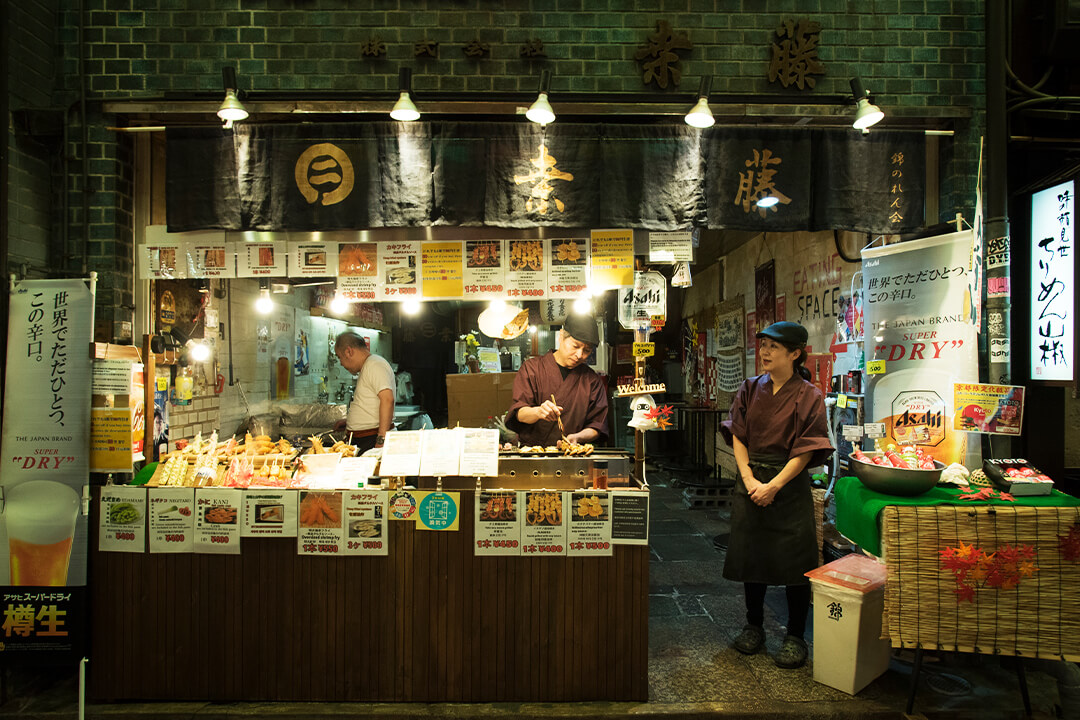
Kuwatou
A lineup of freshly cooked food invites passersby. The charm of this restaurant is that you can enjoy grilled and deep-fried seafood skewers all year round. It is a perfect place for when you feel a little hungry. This is an eat-in and take-out establishment, so you can eat the freshly cooked food in the shop, or you can take it home to enjoy.
- Seafood Restaurant
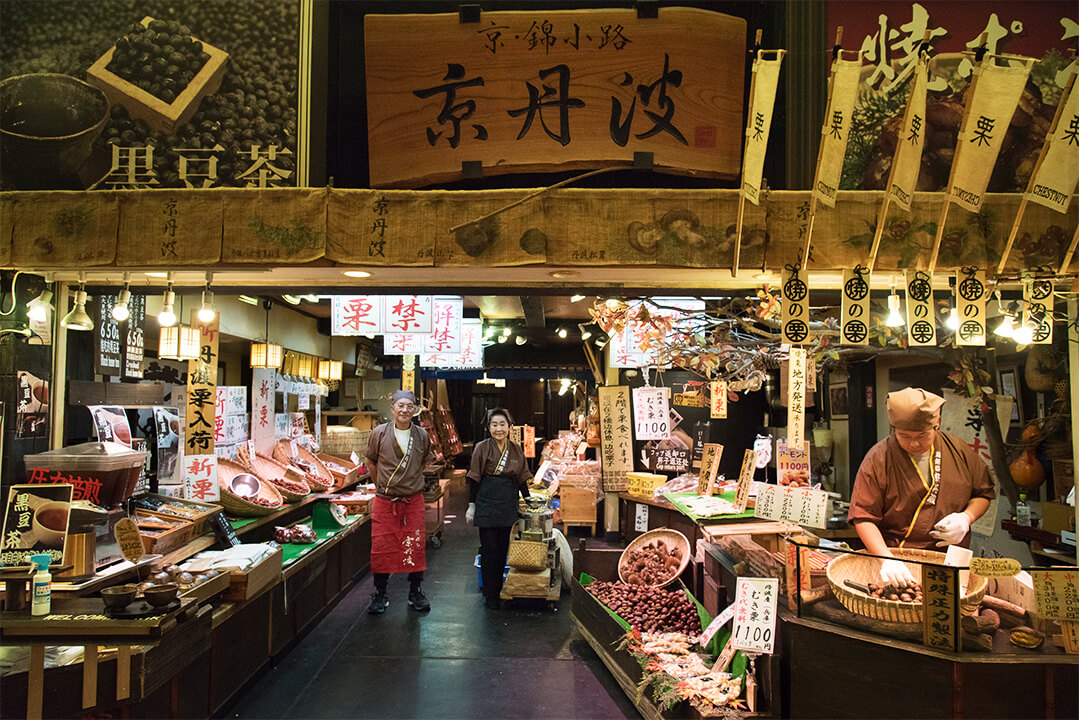
Kyotanba
The demonstration sales in the storefront will make you stop in your tracks. Kyotanba sells mainly roasted chestnuts and other products from Tanba, an area northwest of Kyoto City famous for its agricultural produce, and its signature product, "Yakipon," is made with an improved version of the old-fashioned grain-puffing machine, using only carefully selected chestnuts, and roasted to a fragrant, sweet flavor. It is healthy because it is additive-free, maintaining the natural flavor. The chestnuts can be easily removed from their shells. Please enjoy the full flavor of the natural chestnuts.
- Roasted chestnuts
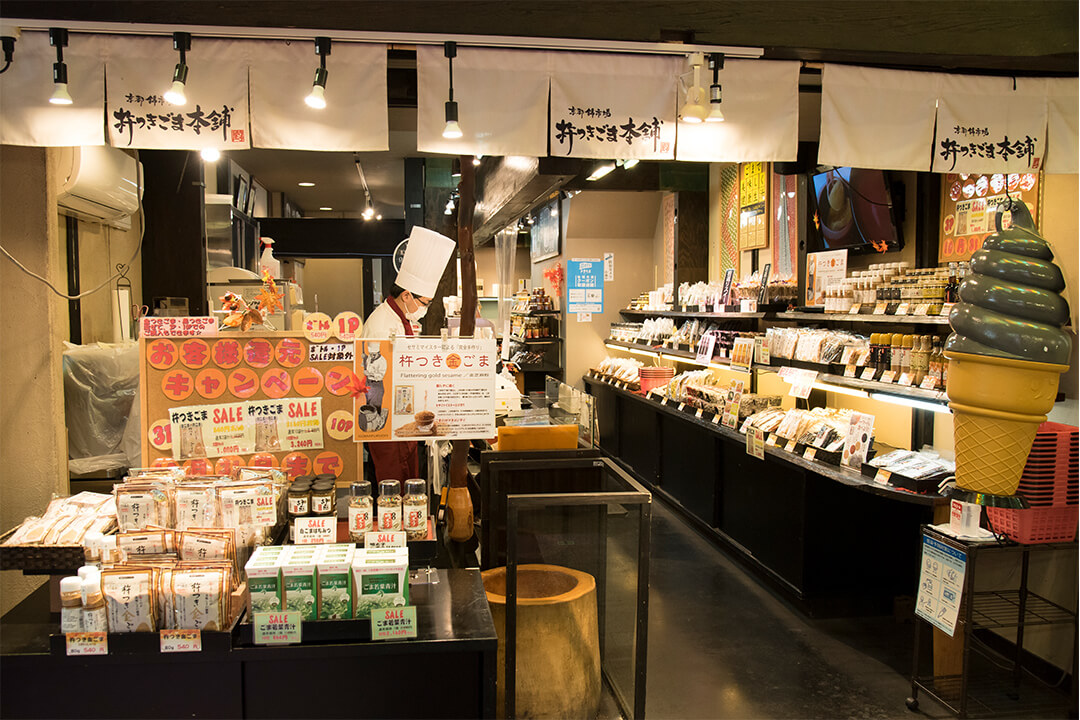
Gomafukudo
The sight of staff grinding sesame seeds with a pestle and mortar at the storefront catches the eyes of people walking along Nishiki-koji Street. The entrance to the shop is filled with the delicious aroma of freshly ground sesame seeds. "Sesame seeds are supposed to be ground by pounding rather than rubbing the pestle over them," they say. "A bitter taste is inevitably produced when sesame seeds are ground by rubbing." This store specializes in sesame, offering a variety of sesame snacks and seasonings, its signature product being the pestle-pounded golden sesame seeds.
- Pestled, Golden Sesame
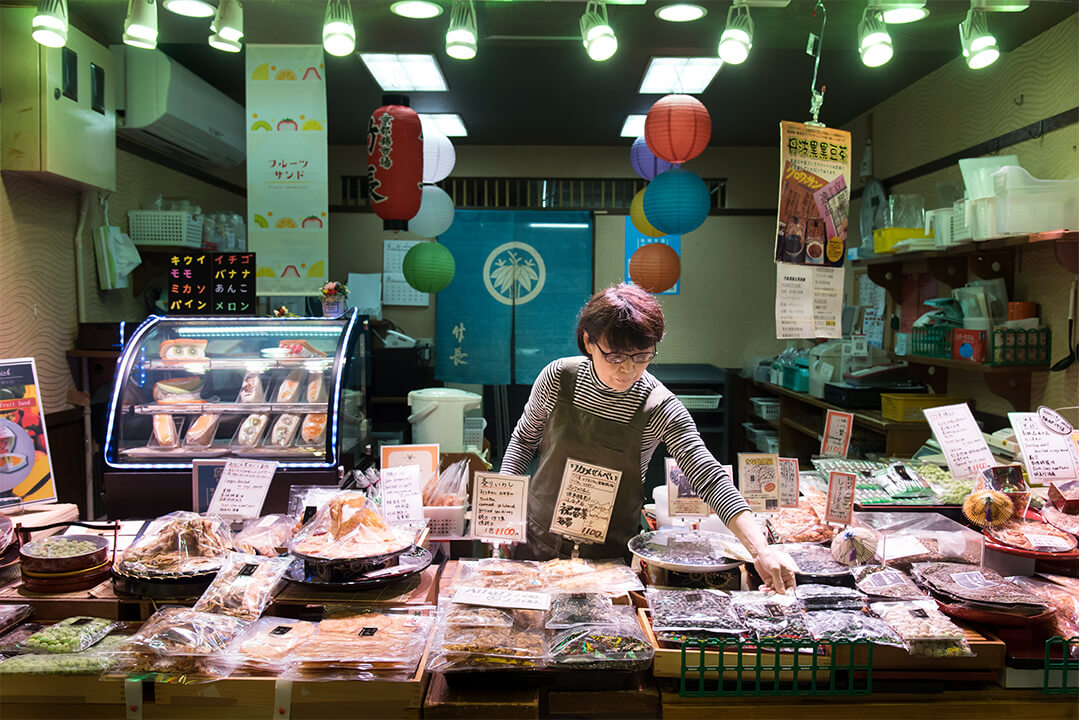
Takenaga
Black soybean snacks and dried seafood products fill this shop. The common point is that they are good for health. The shop's recommended dried products in bags include sea bream, anago conger eel, wakame seaweed, seared sardines, and shrimp. The fruit sandwiches, an unexpected addition to this store's merchandise, come in many varieties, such as strawberry, papaya, fig, and grape.
- Salted dried fish
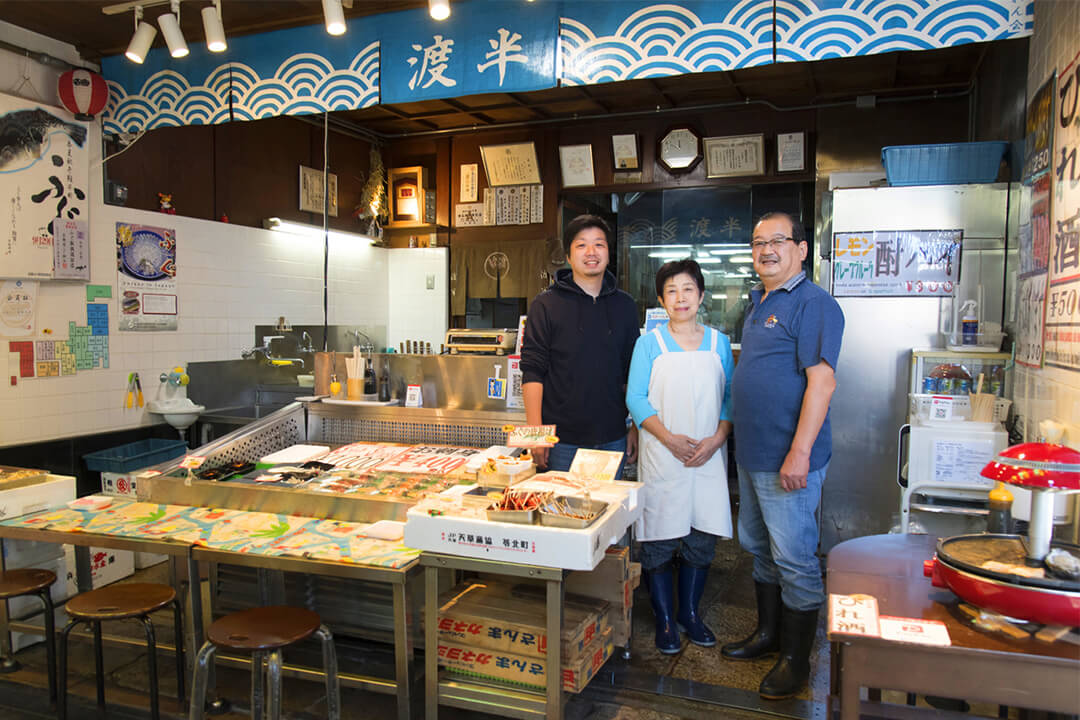
Watahan
Founded in 1897, this shop has a history of over 120 years. Counted from the first owner, Hanshichi Watanabe, the current owner is the fourth generation. The store began as a retailer of fresh fish and now focuses on the preparation, processing, and sales of seafood such as fugu (puffer fish), pike conger eel, and oysters. In addition to small packs of sashimi such as wild sea bream, kampachi (greater amberjack), and blood clams, oysters with shells and deep-fried fugu are also available.
- Fresh Fish
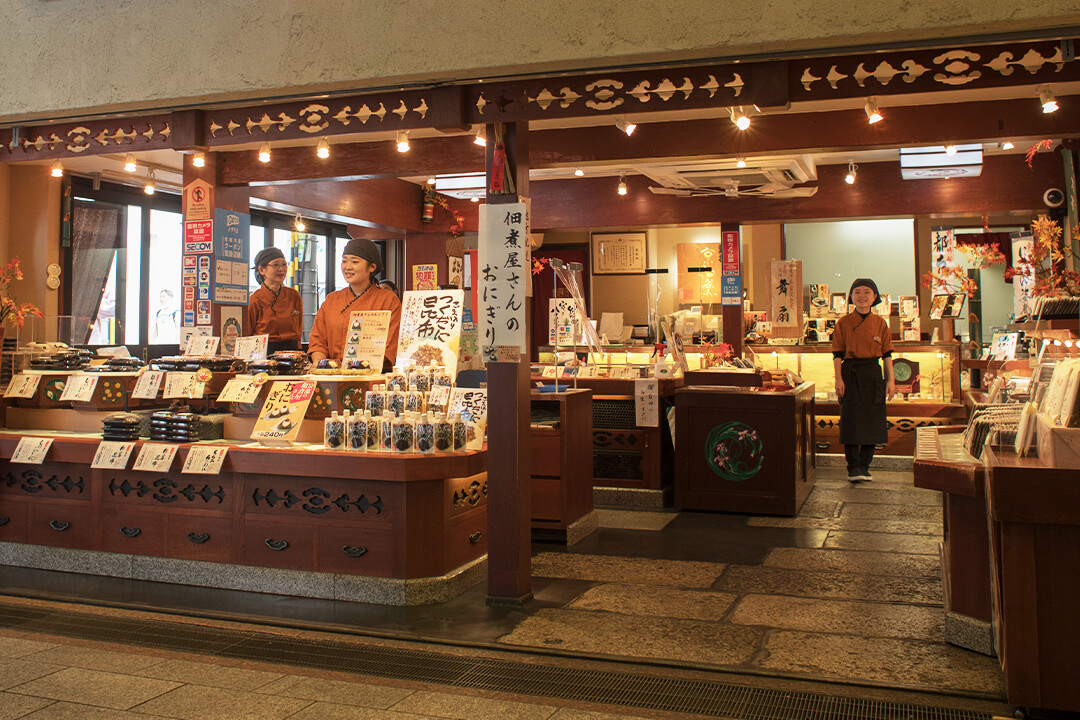
Nomura Tsukudani
Nomura Tsukudani has an ample selection—about 100 kinds!—of tsukudani (food boiled in soy sauce). There are also products sold by weight for home use. Nomura Tsukudani has inherited the tradition of carefully making various products little by little since their early days when they were a delicatessen, which was still rare at the time.
- Kyo Tsukudani
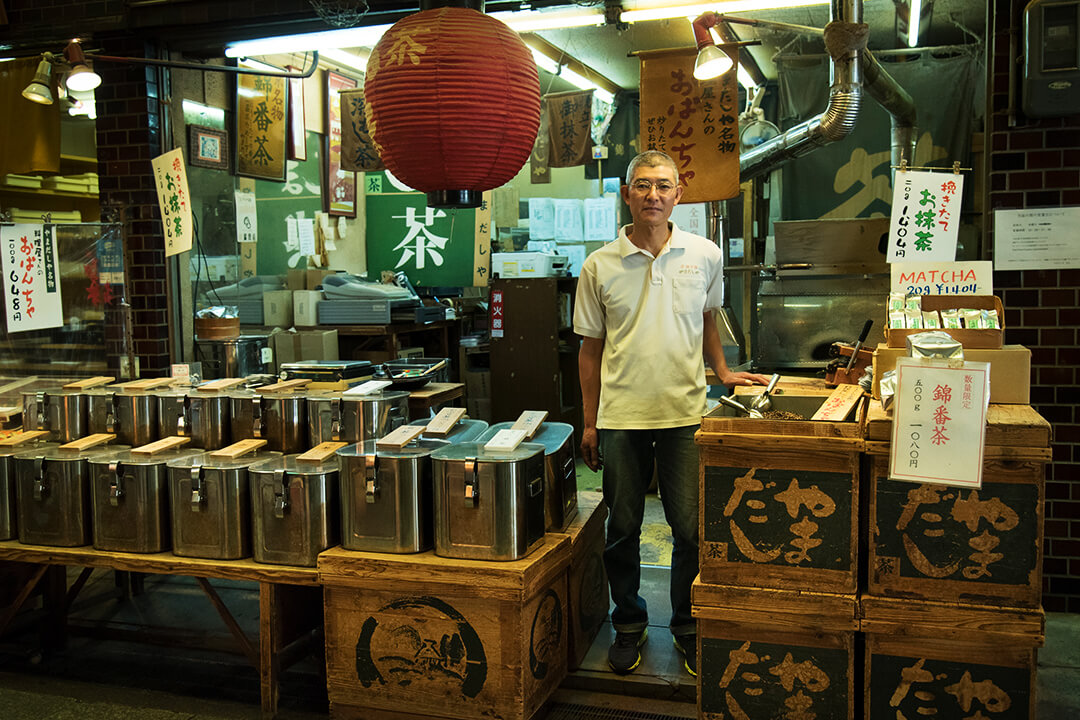
Yamadashiya
Whenever you pass by the shop, the aroma of hojicha (roasted tea), which the owner roasts day in and day out, invites you to come in. In Kyoto, hojicha is called “bancha.” The "ban" in "bancha" is the same as the "ban" in "obanzai" (home cooking), meaning "for daily use," so there is a theory that "bancha" was originally called as such because it was a tea commonly drunk in the home.
- Tea