
All shops
128件Please note that business hours and regular holidays may have changed.
Nishiki Yatai Mura
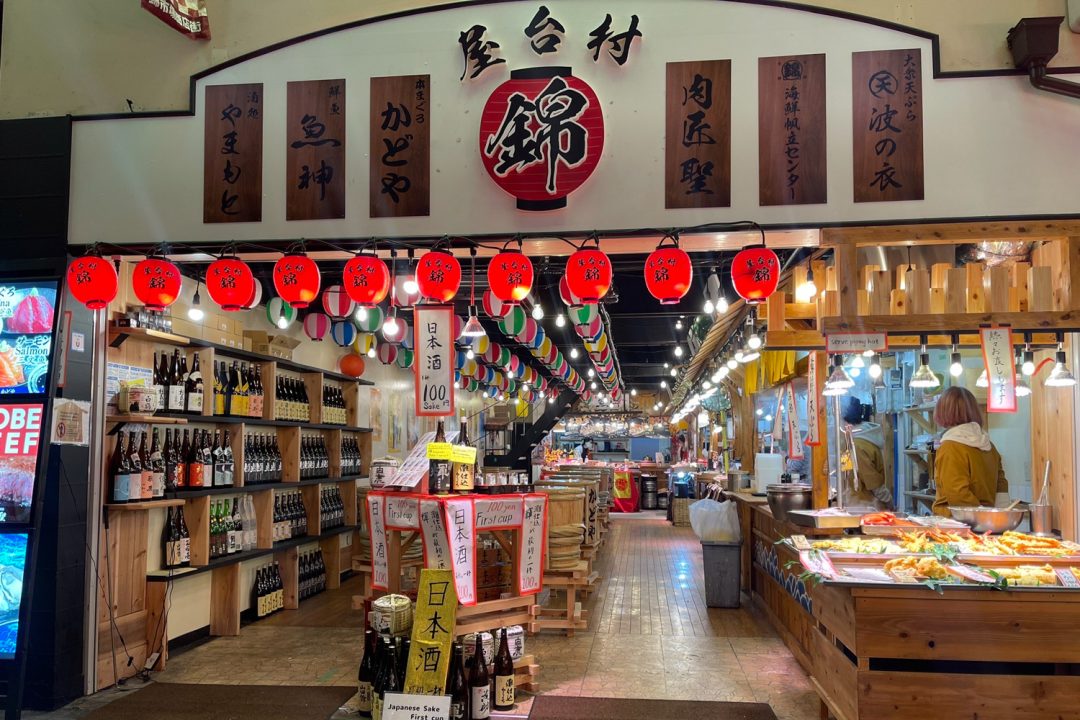
A variety of stalls are lined up selling fresh sashimi, oysters, seafood rice bowls, black wagyu beef steaks, grilled seafood, seafood tempura, and many other items.
- Bar
Miki Keiran
Founded in 1928, this store specializing in dashimaki omelets has been in business for more than 90 years. The copper, rectangular pans lined up in a row are much longer than those for home-use. The eggs and seasoned dashi stock are placed in the pan and rolled quickly from the front to the back over high heat, a technique that is truly the work of a skilled artisan. This method of cooking is called "kyomaki (Kyoto-style roll)," and is unique to Kyoto.
- Japanese Omelette

Kanehide
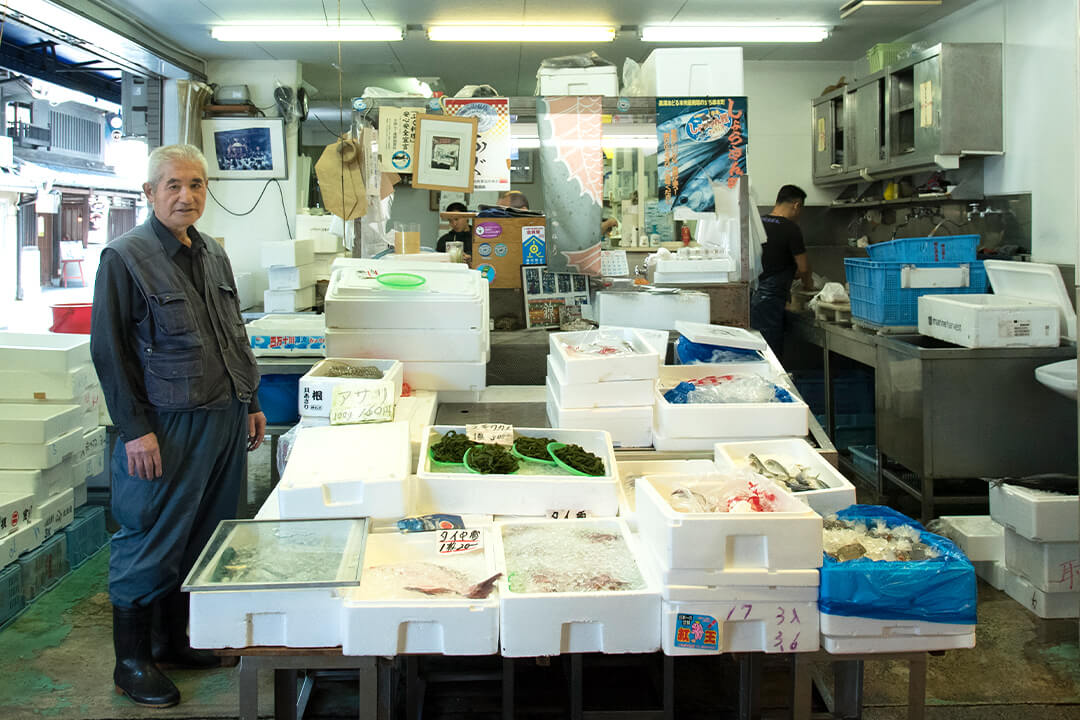
This shop mainly wholesales to high-end restaurants. It orders rare seafood that cannot be found in other stores from all over Japan – Hokkaido to Kyushu. "We also go to Akashi, Maizuru, and Miyazu to purchase directly," the owner says. They also do retail sales to the general public.
- Fresh Fish
Takenaga
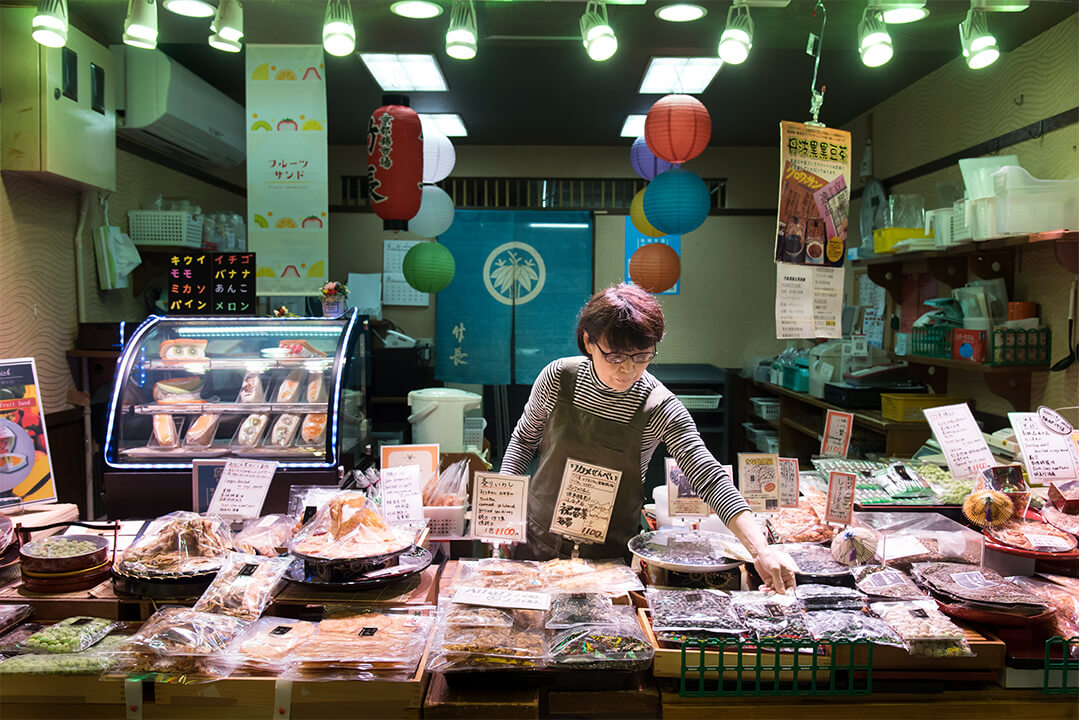
Black soybean snacks and dried seafood products fill this shop. The common point is that they are good for health. The shop's recommended dried products in bags include sea bream, anago conger eel, wakame seaweed, seared sardines, and shrimp. The fruit sandwiches, an unexpected addition to this store's merchandise, come in many varieties, such as strawberry, papaya, fig, and grape.
- Salted dried fish
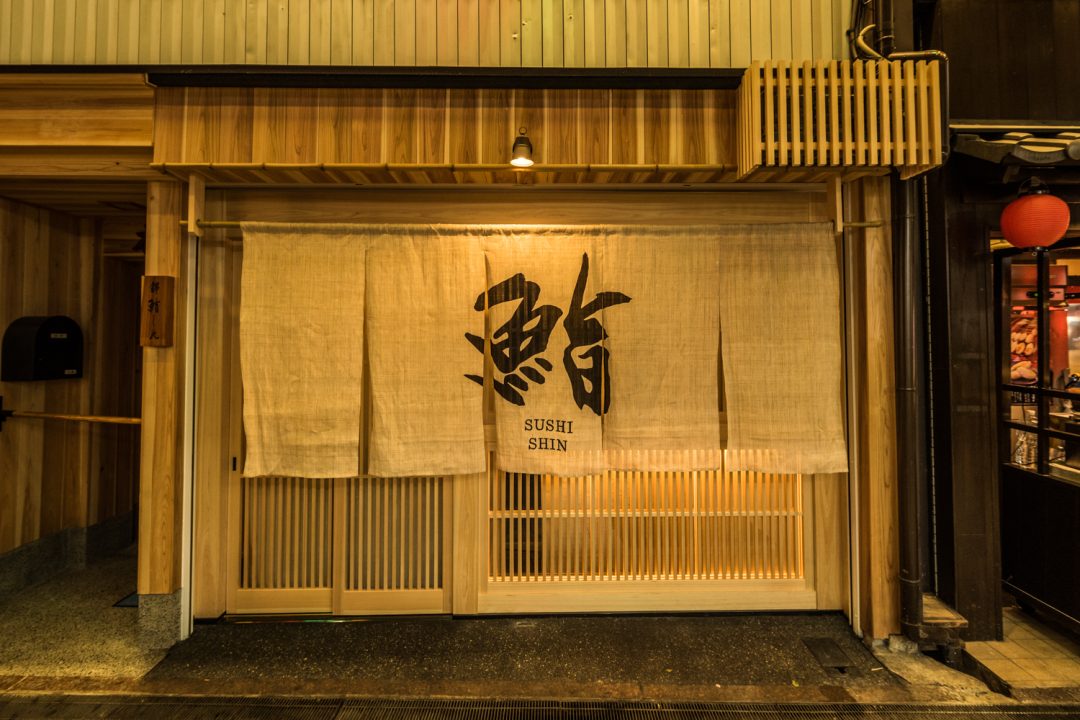
Nishiki Sushi Shin Main store
“We serve our finest Edomae-zushi (Tokyo-style sushi) over a counter made of a single piece of hinoki cypress wood,” they say.
“We purchase our sushi ingredients from all over Japan, especially fresh fish directly from the Sea of Japan, including Miyazu and Maizuru in Kyoto. For lunch, we offer not only sushi, but also sea bream chazuke (rice in a clear soup or tea) and fresh seafood chirashi-zushi, etc., which can be enjoyed casually. At night, we offer an omakase (“leave-it-to-us”) sushi course. Please enjoy the many kinds of sushi we offer. We carefully choose between red vinegar and white vinegar for each type of sushi.”
- Sushi
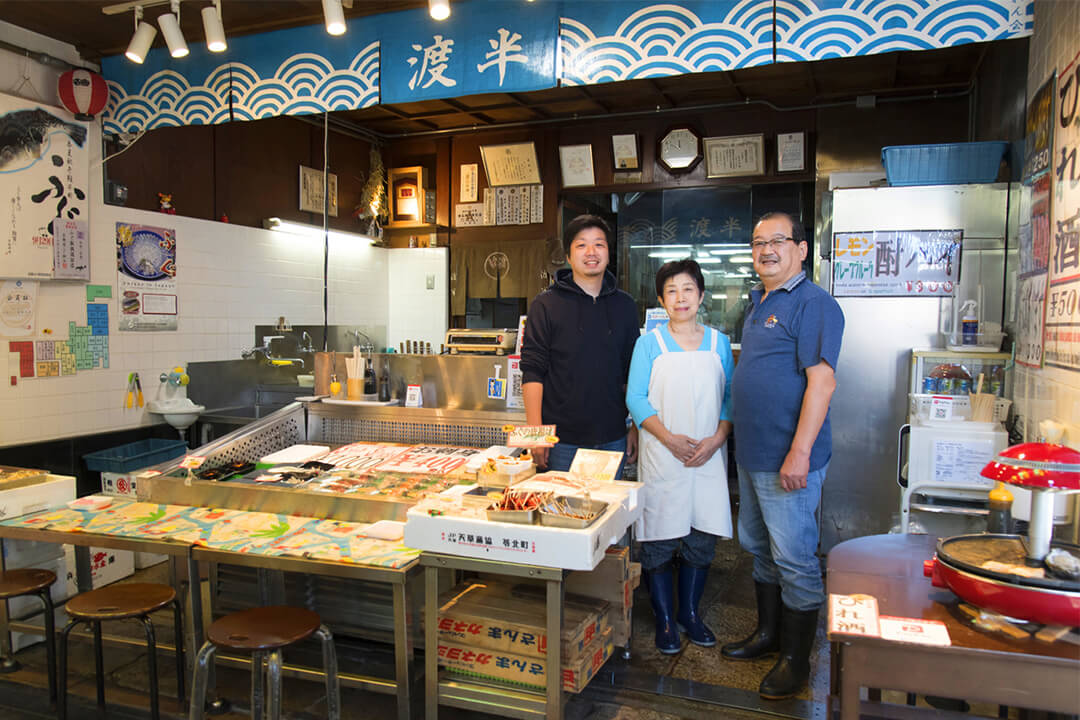
Watahan
Founded in 1897, this shop has a history of over 120 years. Counted from the first owner, Hanshichi Watanabe, the current owner is the fourth generation. The store began as a retailer of fresh fish and now focuses on the preparation, processing, and sales of seafood such as fugu (puffer fish), pike conger eel, and oysters. In addition to small packs of sashimi such as wild sea bream, kampachi (greater amberjack), and blood clams, oysters with shells and deep-fried fugu are also available.
- Fresh Fish
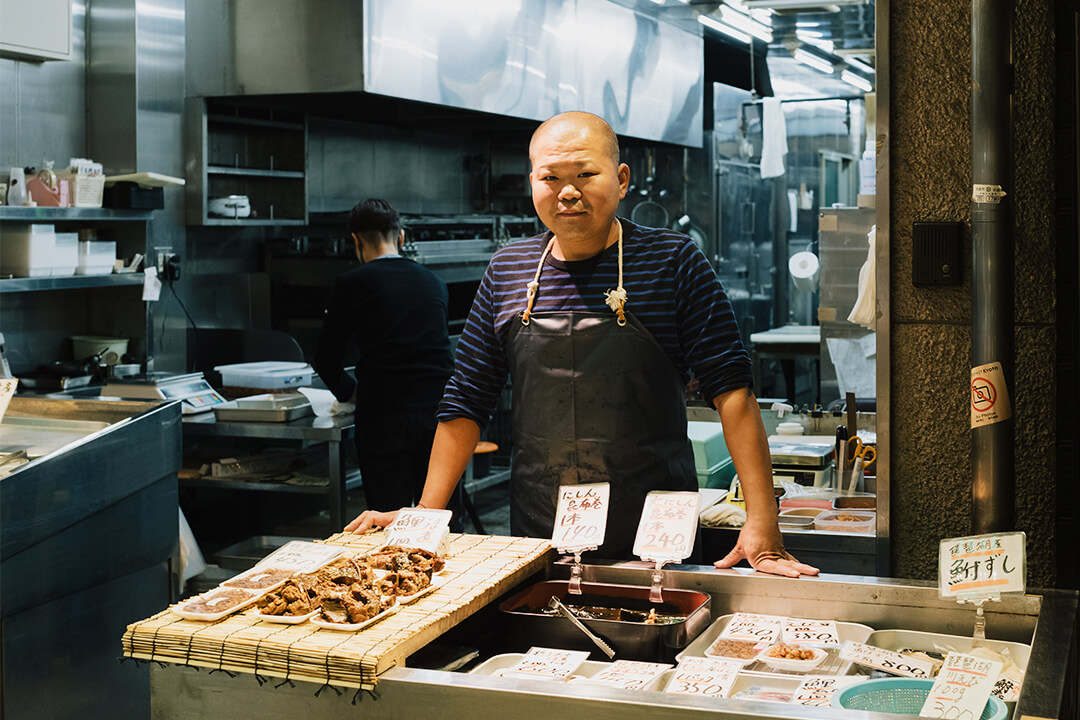
Yamamoto Banba
Yamamoto Banba specializes in fresh, live river fish. They use Nishiki's underground water to deliver river fish straight to restaurants while they are still swimming. They also focus on making prepared specialty dishes using river fish. Because they process and use live fish, the taste is very delicious. They sell these products, which are made with fresh river fish from Lake Biwa and specially seasoned, in their store and ship them to other parts of Japan.
- River Fish
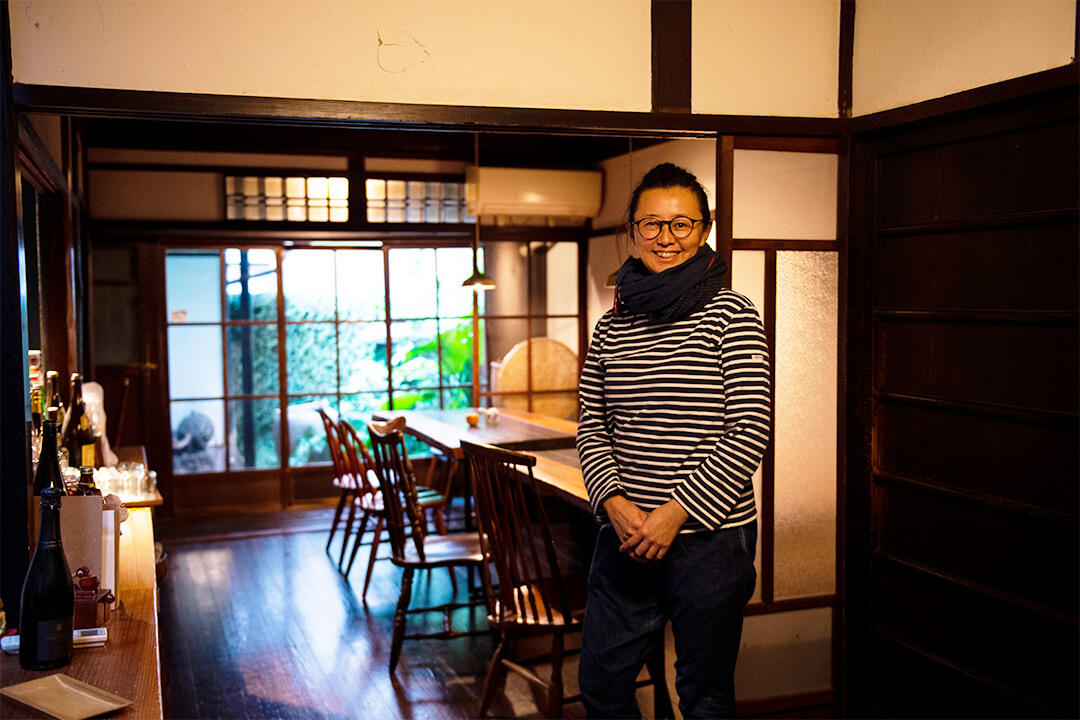
Hale
The restaurant's sign invites you to enter a narrow alleyway and into a quiet Kyoto machiya townhouse that makes you forget the bustle of the market. This was the native home of the owner's grandmother, who ran a kombu (kelp) shop until sometime before World War II. This is a lunch restaurant that focuses on Nishiki Market ingredients such as yuba (soy milk skin) and nama-fu (wheat gluten cakes), as well as vegetables from the Kyoto area. Their vegetarian dishes that do not use animal products are also recommended for the health-conscious.
- Vegetarian Cooking
Kikuya
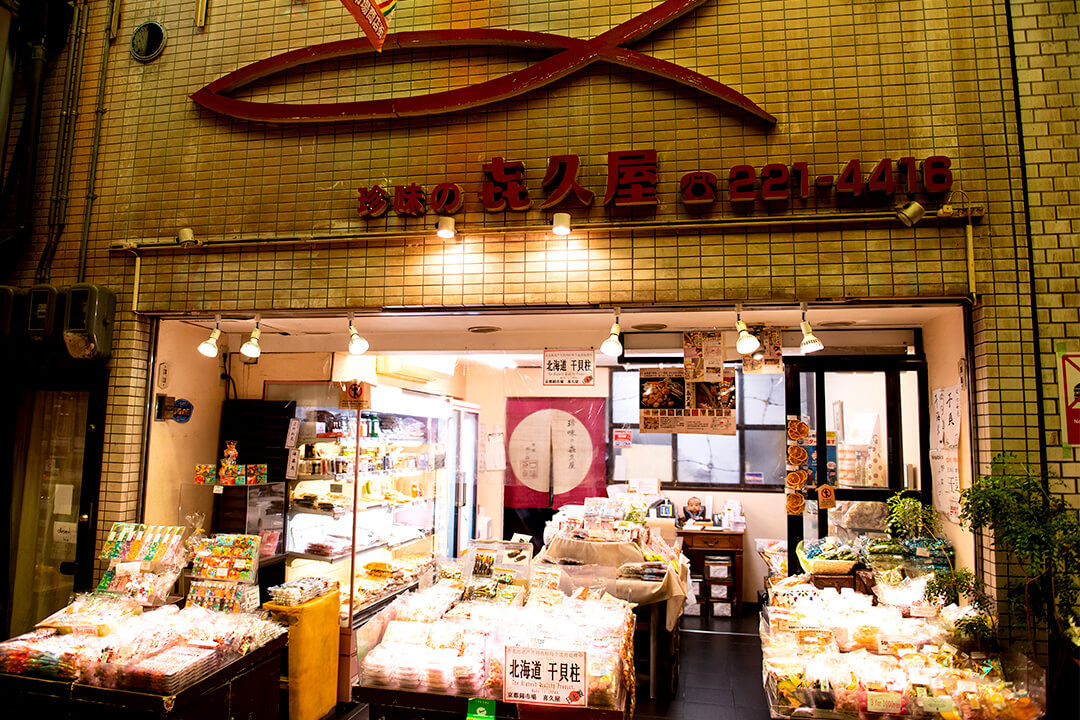
As one would expect from a Nishiki Market delicacy store, Kikuya has shelves after shelves of unique foods. There are many rare items, and even just looking through the shelves and refrigerators is exciting. There are more than 400 items. Not only are there seafood delicacies, such as karasumi (dried salted mullet roe pouch) and sea urchin, but also frozen foods, ingredients for tea ceremonies, nuts, dried fruits, etc. You will find a wide range of rare and tasty products. Kikuya is not only a shop with a wide variety of snacks that go well with drinks. It is also a shop that supports the growing appreciation of Kyoto’s cuisine.
- Delicacies
Hanayori kiyoe
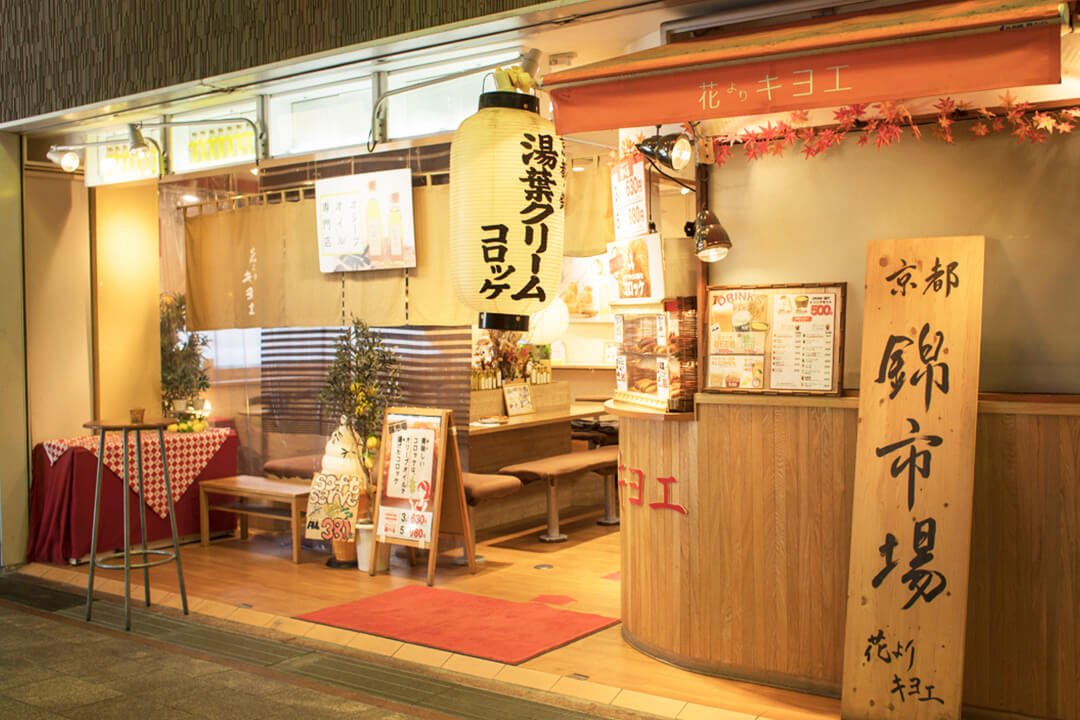
The Kiyoe Olive Farm is located in South Australia. Kiyoe is the highest quality olive oil made from the ripe olives harvested there. This store sells Kiyoe olive oil and deep-fried foods made with Kiyoe olive oil. It is very popular among both locals and tourists.
- Olive oil