
shop of Japanese sweets
23件Please note that business hours and regular holidays may have changed.
Kyo Tsukimachian West
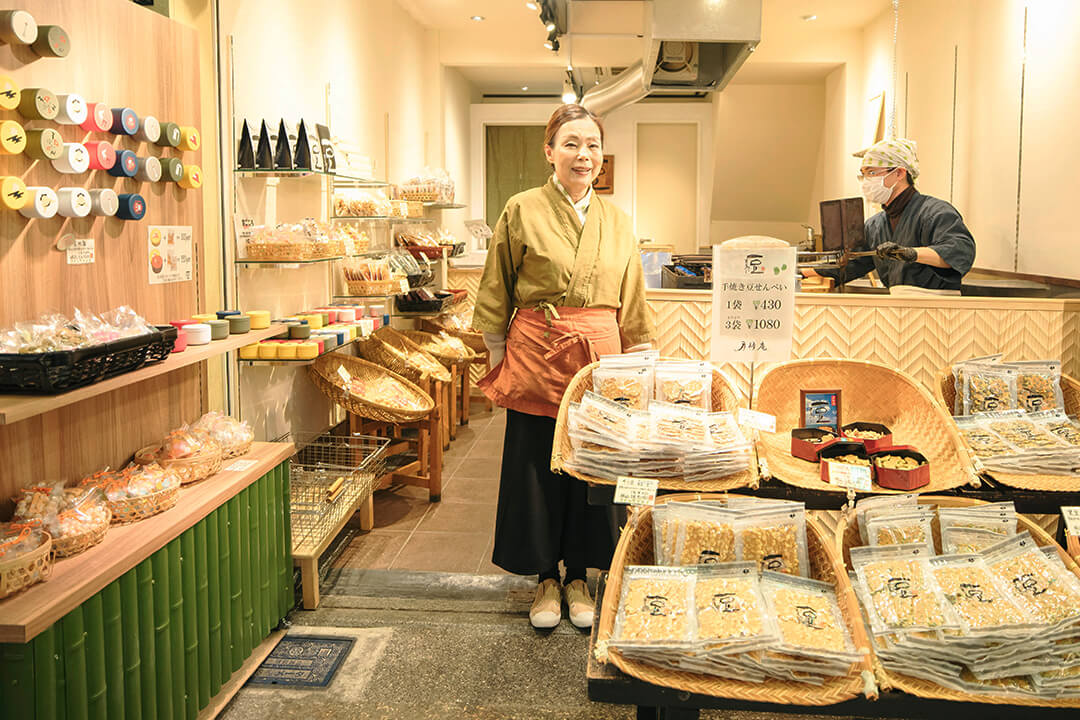
This shop specializes in an unusual pastry called "Fuku-Daruma Anesu.” "Anesu" is based on the sound of a Portuguese word for baked sweets. It is actually a word that has been used for a long time in Japan, although not many people are familiar with it. The ingredients are flour, sugar, and eggs. The surface is baked to a smooth firmness, and the face of Daruma (a Buddhist saint) and the word "fuku," meaning "good luck," are branded on it. Hence, “Fuku-Daruma Anesu.” The texture is crispy, like a Japanese "bolo" cookie, which also happens to be derived from a Portuguese pastry.
- Rice crackers
Tsubakiya
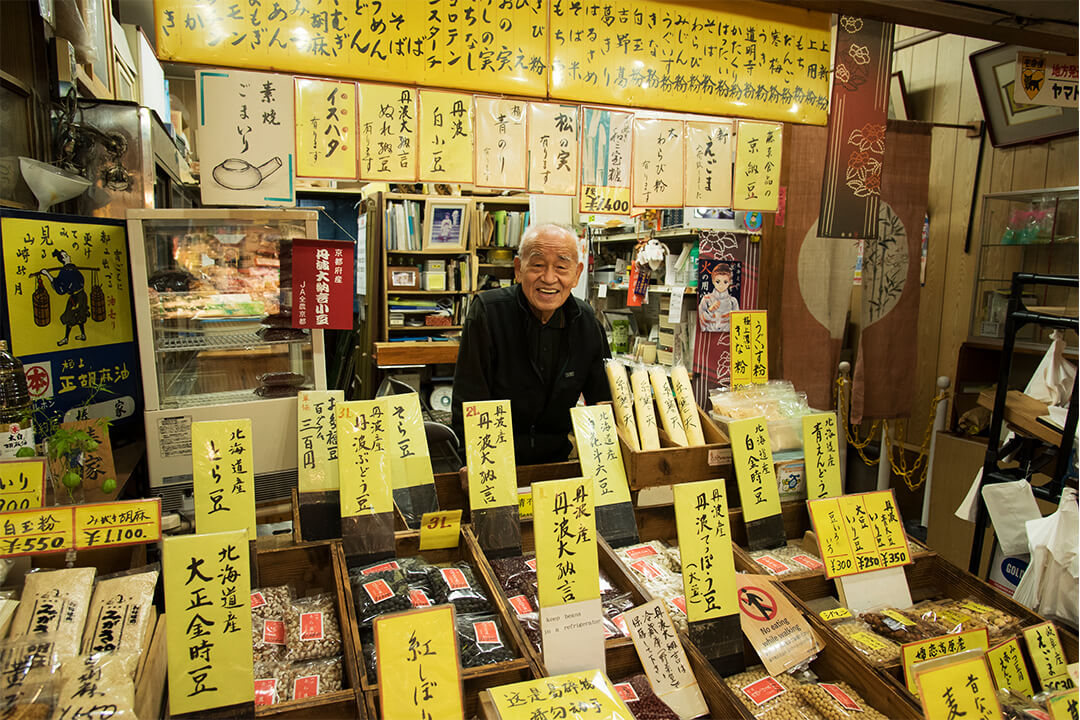
“Since we have a shop here at Nishiki Market, we want to demonstrate the advantages of face-to-face sales.” The shopkeeper gives customers a piece of paper with recipes on how to boil beans and other ingredients, and he also teaches how to preserve them. He also has a research-oriented side, learning various other methods of cooking and preparing that are in line with the times. He loves to talk, so you can ask him anything.
- Beans and cereals
Miki Keiran
Founded in 1928, this store specializing in dashimaki omelets has been in business for more than 90 years. The copper, rectangular pans lined up in a row are much longer than those for home-use. The eggs and seasoned dashi stock are placed in the pan and rolled quickly from the front to the back over high heat, a technique that is truly the work of a skilled artisan. This method of cooking is called "kyomaki (Kyoto-style roll)," and is unique to Kyoto.
- Japanese Omelette

Nishiki Marun
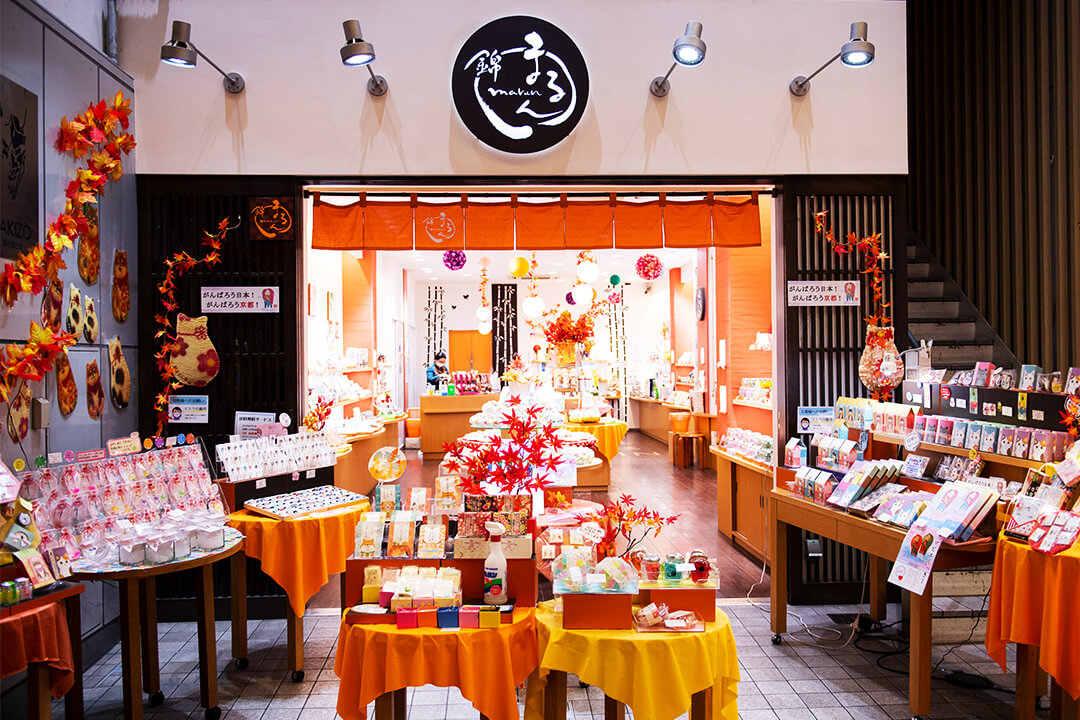
Nishiki Marun is a shop where so many different kinds of “cuteness” gather, including cute confections and sundries, that it is impossible to describe it simply. To briefly introduce the merchandise sold in this colorful and bright store, it has colorful kompeito candy and Kyo-ame candy, original cookies made in the company's own facility, Kyoto-exclusive cosmetics, facial packs, perfumes, stick-on nails, and earrings with Japanese designs. There is also a large selection of Kyoto's local sake.
- Sweets,Sake
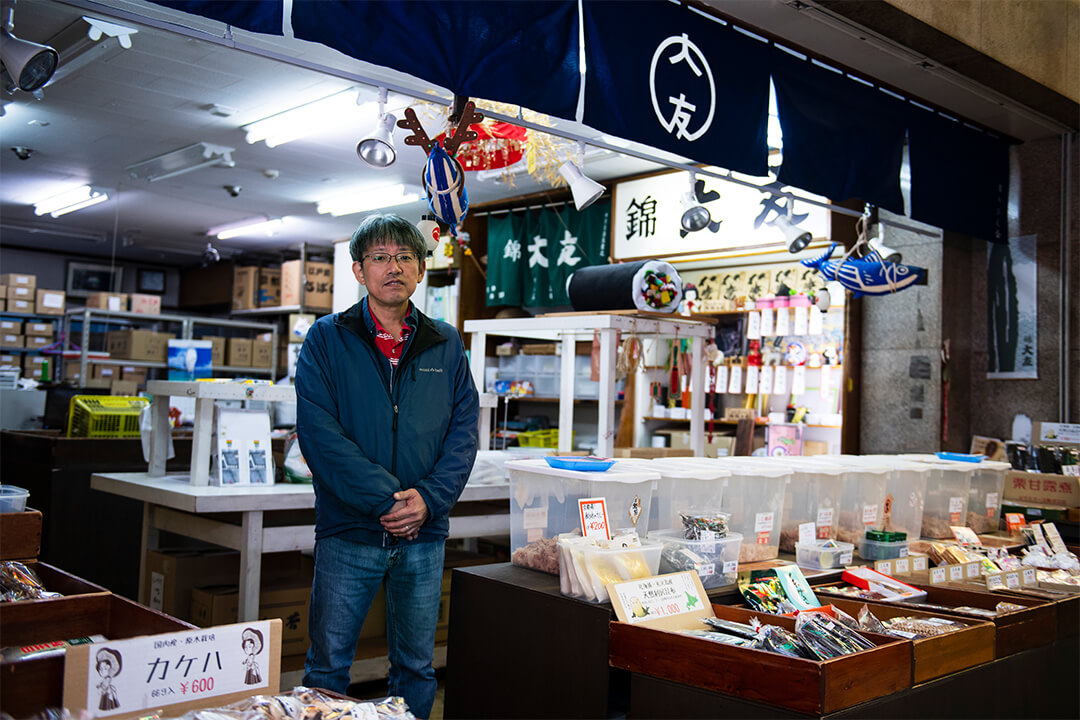
Nishiki Daitomo
Merely saying "dry foods shop" does not convey the depth of this store. The store owner says, "You may find what you are looking for," but it would be more appropriate to say, "You may find something you never thought you would find.” You will find everything from food for votive offerings, ingredients for chakaiseki (tea ceremony kaiseki dishes), and Japanese sweets to rare bottled ingredients. Some items are not on display in the store, so feel free to inquire.
- Dried Food
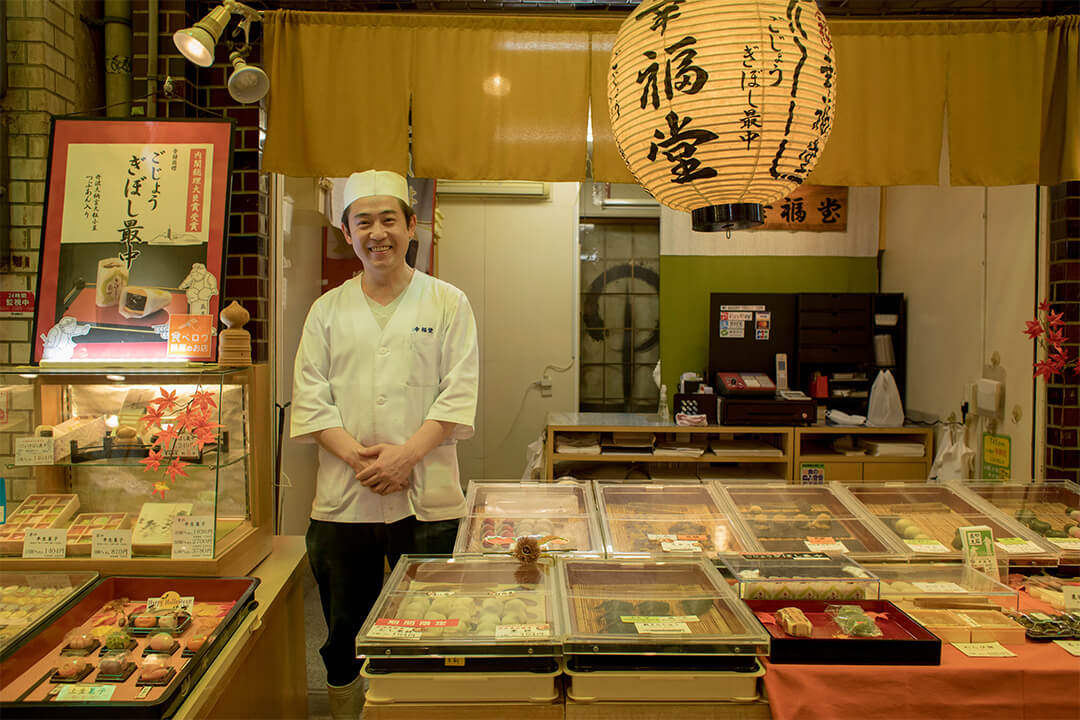
Nishiki Kofukudo
A delicious sight. This is a storefront that fits such words. Kyoto is a city that places great importance on the customs of each season. You can feel and taste Kyoto with sweets associated with these customs. Kofukudo, founded in 1868, has had its main store near the Gojo Ohashi Bridge (now Matsubara Bridge) for 150 years. The specialty Gojo Giboshi Monaka is a monaka made in the motif of a giboshi (a type of ornamental finial used on Japanese railings) decorating the parapets of the Gojo Ohashi Bridge.
- Japanese Confectionery
Minoyoshi
In a word, Minoyoshi is a cereal store, but that does not describe it wholly. It has beans such as black soya beans and azuki beans meant to be cooked at home. It has confectionery ingredients such as Wasanbon sugar and kanbaiko rice flour that are used in Japanese confectionery shops. It also has dried bracken fern starch and frozen konjac jelly used in kaiseki cuisine for special tea ceremonies. There are also a variety of items that, at first glance, even locals wonder what they are used for.
- Beansand Cereals

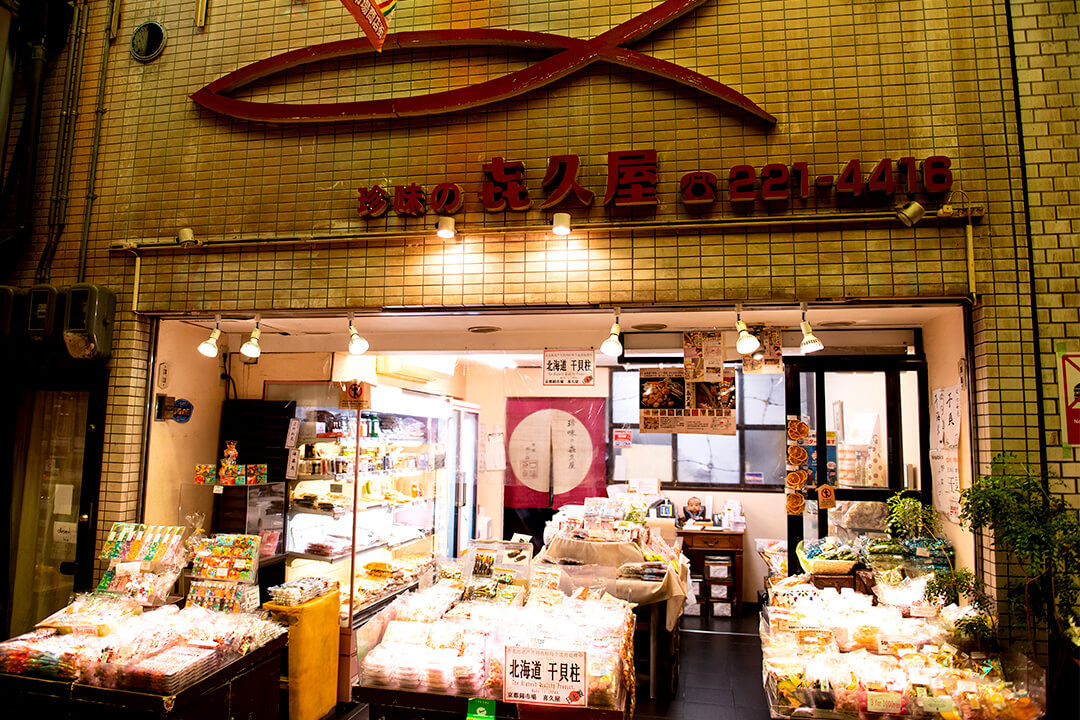
Kikuya
As one would expect from a Nishiki Market delicacy store, Kikuya has shelves after shelves of unique foods. There are many rare items, and even just looking through the shelves and refrigerators is exciting. There are more than 400 items. Not only are there seafood delicacies, such as karasumi (dried salted mullet roe pouch) and sea urchin, but also frozen foods, ingredients for tea ceremonies, nuts, dried fruits, etc. You will find a wide range of rare and tasty products. Kikuya is not only a shop with a wide variety of snacks that go well with drinks. It is also a shop that supports the growing appreciation of Kyoto’s cuisine.
- Delicacies
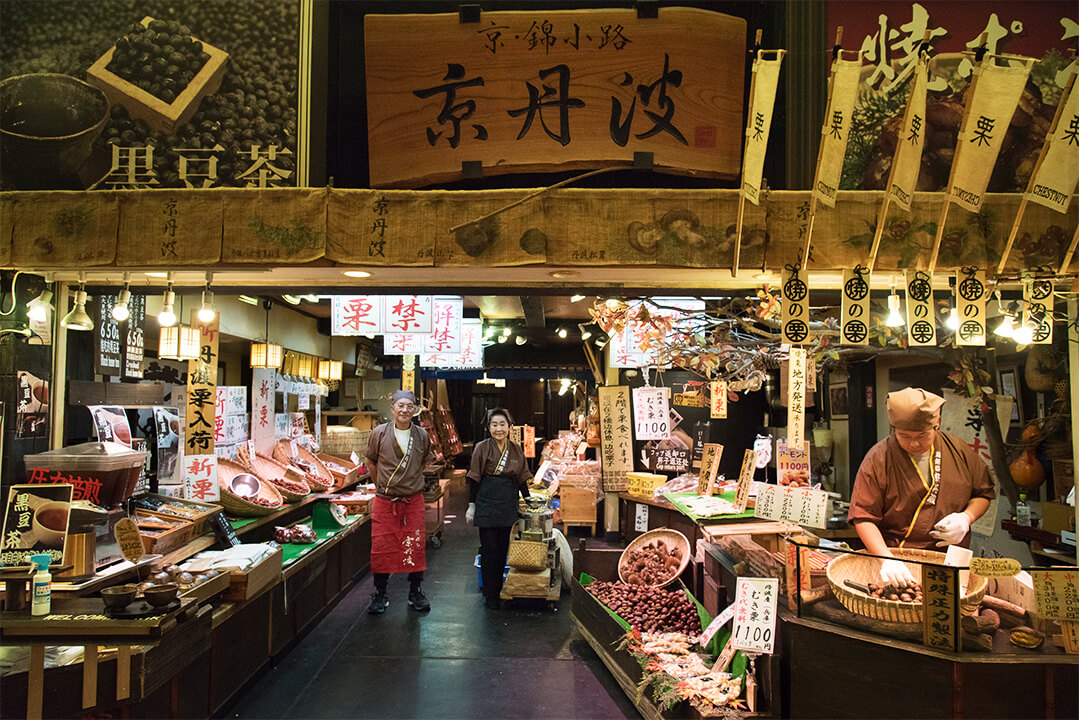
Kyotanba
The demonstration sales in the storefront will make you stop in your tracks. Kyotanba sells mainly roasted chestnuts and other products from Tanba, an area northwest of Kyoto City famous for its agricultural produce, and its signature product, "Yakipon," is made with an improved version of the old-fashioned grain-puffing machine, using only carefully selected chestnuts, and roasted to a fragrant, sweet flavor. It is healthy because it is additive-free, maintaining the natural flavor. The chestnuts can be easily removed from their shells. Please enjoy the full flavor of the natural chestnuts.
- Roasted chestnuts
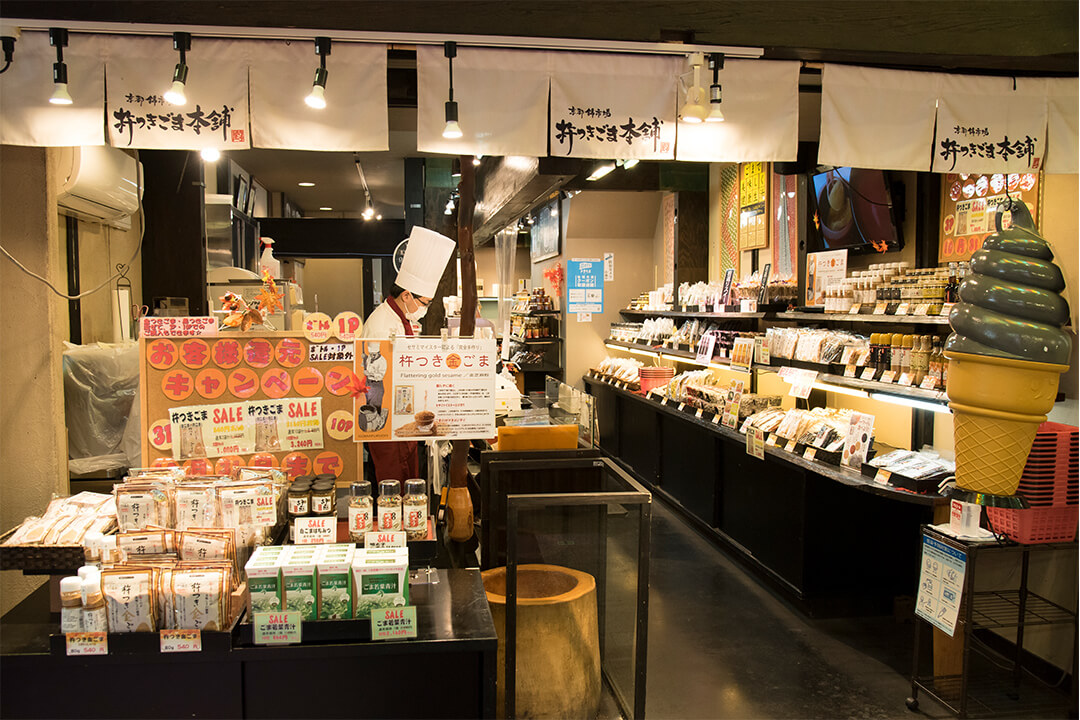
Gomafukudo
The sight of staff grinding sesame seeds with a pestle and mortar at the storefront catches the eyes of people walking along Nishiki-koji Street. The entrance to the shop is filled with the delicious aroma of freshly ground sesame seeds. "Sesame seeds are supposed to be ground by pounding rather than rubbing the pestle over them," they say. "A bitter taste is inevitably produced when sesame seeds are ground by rubbing." This store specializes in sesame, offering a variety of sesame snacks and seasonings, its signature product being the pestle-pounded golden sesame seeds.
- Pestled, Golden Sesame