
shop of sweets
27件Please note that business hours and regular holidays may have changed.
SNOOPY Tea House
This store is like a paradise for Snoopy fans. The first floor of the store, converted from an old Kyoto townhouse, sells a variety of Snoopy goods. It has a take-out corner for dorayaki sweet bean paste sandwiches and soft-serve ice cream. Even these are designed with Peanuts characters. The second floor is a restaurant, where of course all the menu items are decorated with Peanuts characters.
- Snoopy themed goods,Tea House

Kyo Tsukimachian East
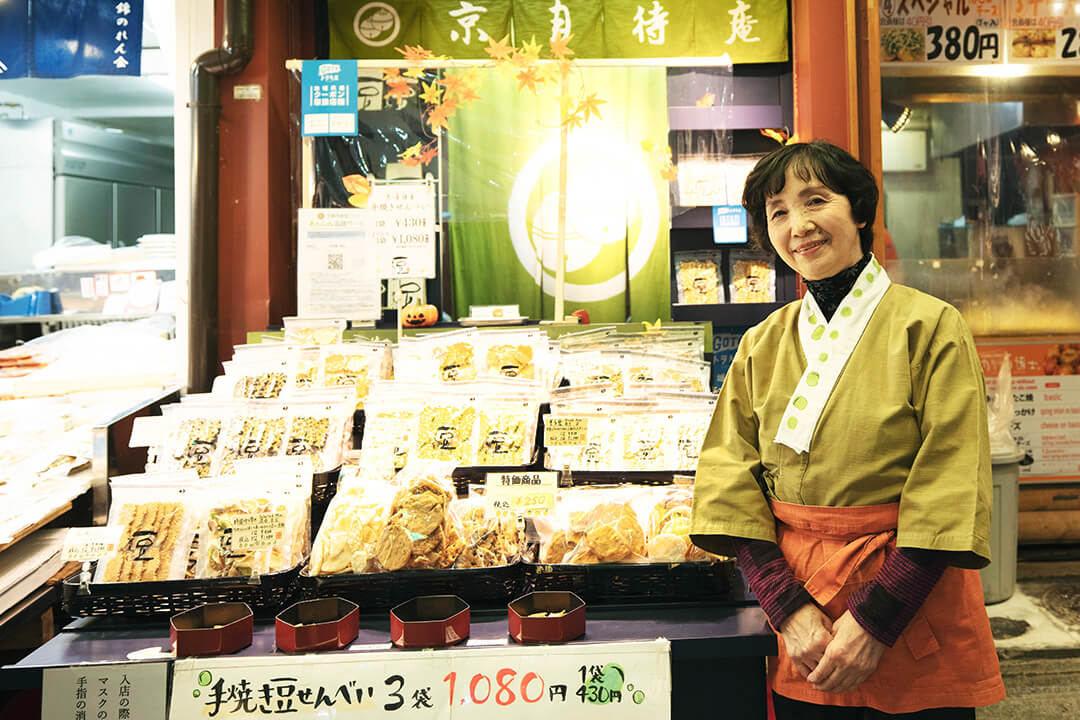
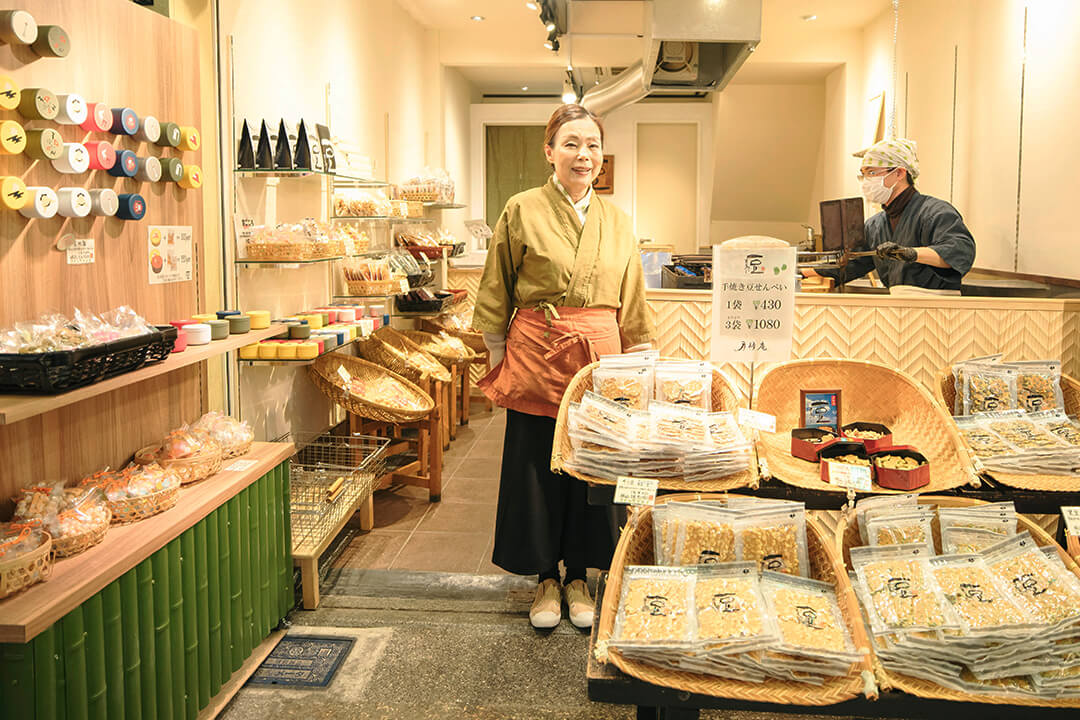
This Kyoto sweets and snack shop is nostalgic yet novel. The main product is hand-baked rice crackers. The store has inherited the tools and techniques of hand-baking from a store founded at the end of the Edo period (1603-1867), and makes rice crackers by hand without using any machines. Their mamesenbei (rice crackers with beans in the dough) uses black soybeans, green peas, peanuts, and even pumpkin seeds in addition to the most popular broad beans.
- Rice crackers
Kyo Tsukimachian West
This shop specializes in an unusual pastry called "Fuku-Daruma Anesu.” "Anesu" is based on the sound of a Portuguese word for baked sweets. It is actually a word that has been used for a long time in Japan, although not many people are familiar with it. The ingredients are flour, sugar, and eggs. The surface is baked to a smooth firmness, and the face of Daruma (a Buddhist saint) and the word "fuku," meaning "good luck," are branded on it. Hence, “Fuku-Daruma Anesu.” The texture is crispy, like a Japanese "bolo" cookie, which also happens to be derived from a Portuguese pastry.
- Rice crackers
Tsubakiya
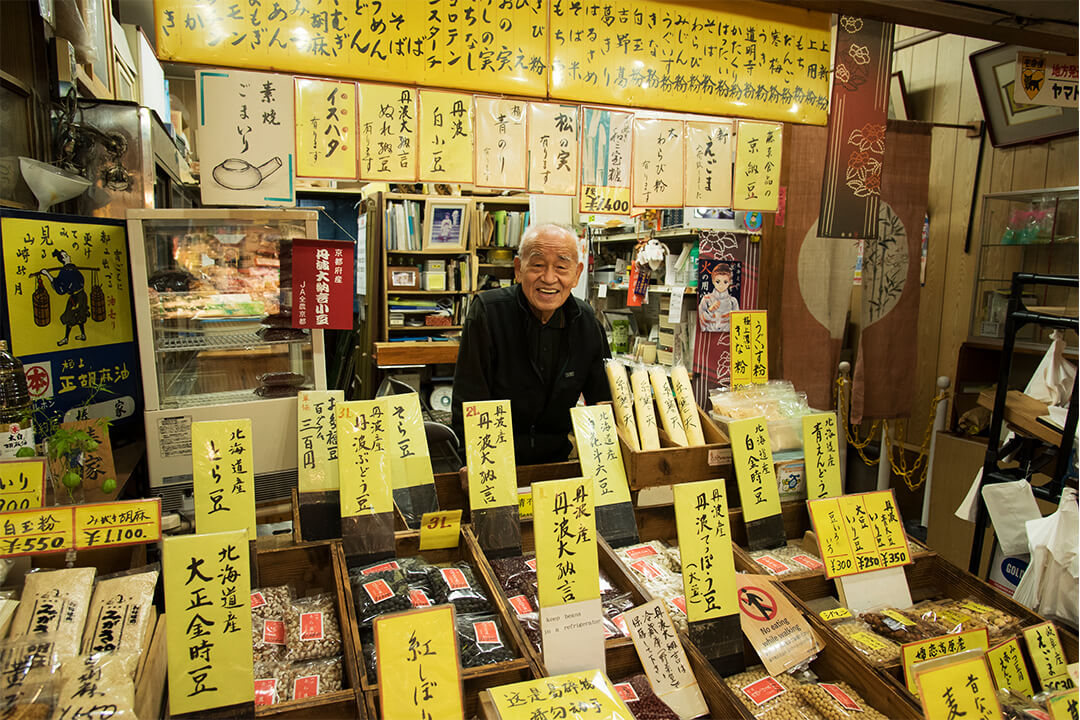
“Since we have a shop here at Nishiki Market, we want to demonstrate the advantages of face-to-face sales.” The shopkeeper gives customers a piece of paper with recipes on how to boil beans and other ingredients, and he also teaches how to preserve them. He also has a research-oriented side, learning various other methods of cooking and preparing that are in line with the times. He loves to talk, so you can ask him anything.
- Beans and cereals
Sugi Honey shop
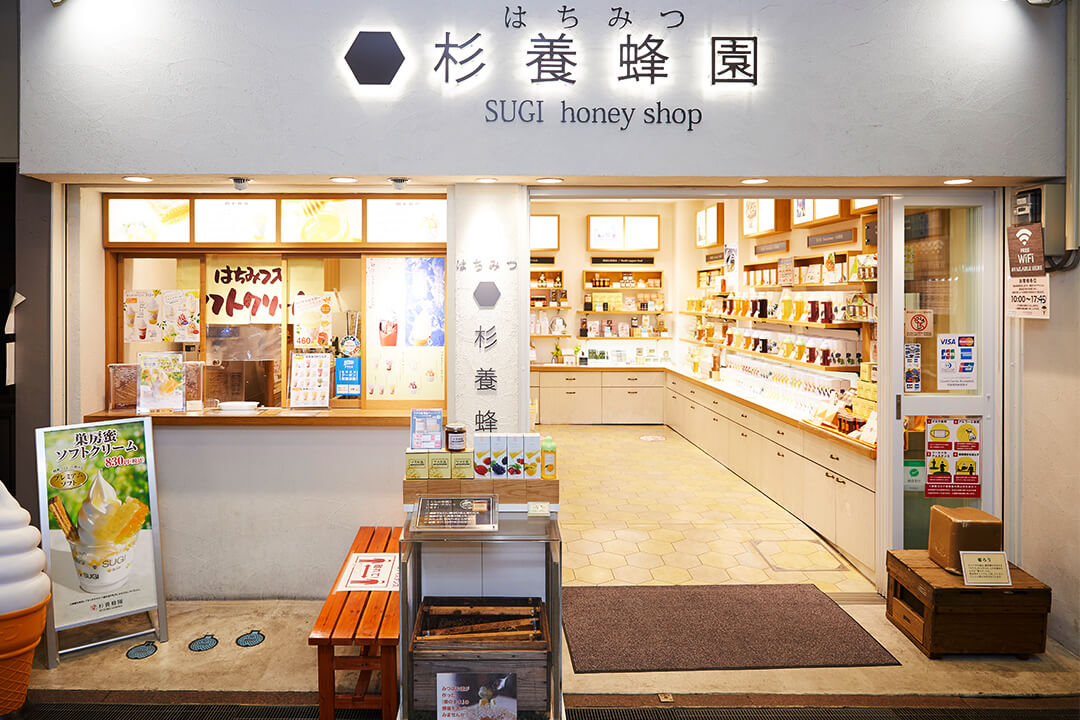
Honey is a gift of nature. Sugi Honey Shop raises bees in their own apiary in Kumamoto Prefecture and also collects honey from all over Japan. They sell pure rich honey, fruit juice blended with honey, royal jelly, propolis, the New Zealand manuka honey, which has been gaining attention in recent years for its health benefits, and more. Their lineup of honey products are loved by people of all ages.
- Honey
Houkyuuan
The surimi (minced or ground seafood) used for the fish cakes at Houkyuuan is mainly made from the highest grade of shiroguchi (silver white croaker) and itoyori (golden threadfin bream), and is grinded in a stone mortar, which is the traditional method. No flour is used. It is gluten-free.
- Medicinal food with fishcake

Miki Keiran
Founded in 1928, this store specializing in dashimaki omelets has been in business for more than 90 years. The copper, rectangular pans lined up in a row are much longer than those for home-use. The eggs and seasoned dashi stock are placed in the pan and rolled quickly from the front to the back over high heat, a technique that is truly the work of a skilled artisan. This method of cooking is called "kyomaki (Kyoto-style roll)," and is unique to Kyoto.
- Japanese Omelette

Nishiki Marun
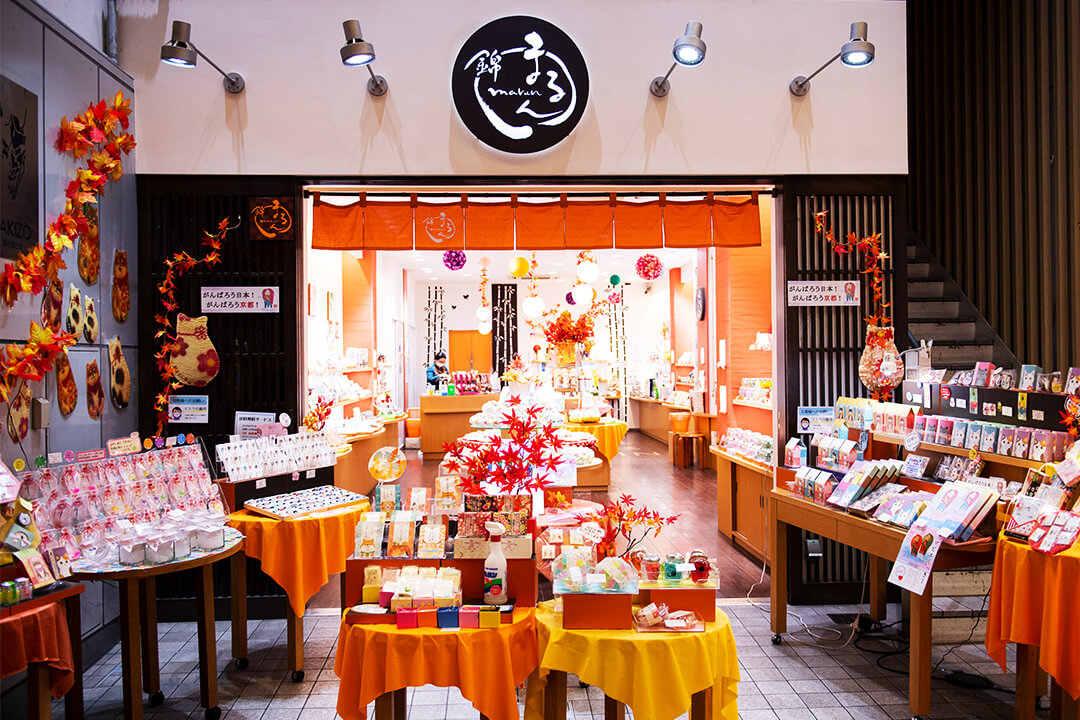
Nishiki Marun is a shop where so many different kinds of “cuteness” gather, including cute confections and sundries, that it is impossible to describe it simply. To briefly introduce the merchandise sold in this colorful and bright store, it has colorful kompeito candy and Kyo-ame candy, original cookies made in the company's own facility, Kyoto-exclusive cosmetics, facial packs, perfumes, stick-on nails, and earrings with Japanese designs. There is also a large selection of Kyoto's local sake.
- Sweets,Sake
Nishiki Daitomo
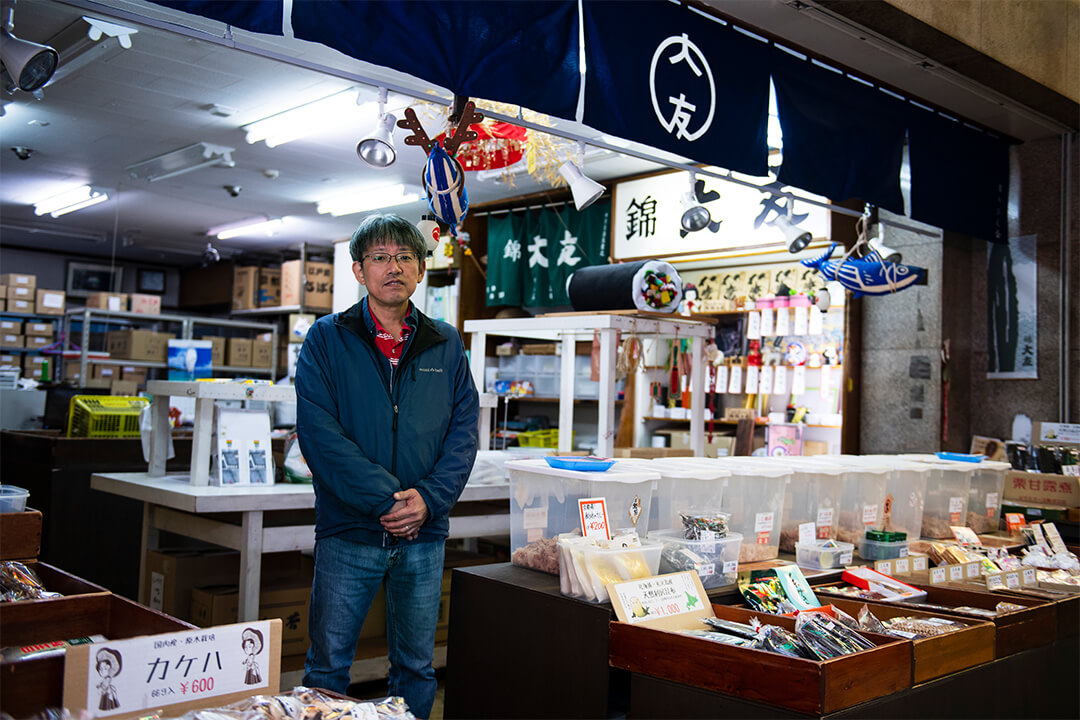
Merely saying "dry foods shop" does not convey the depth of this store. The store owner says, "You may find what you are looking for," but it would be more appropriate to say, "You may find something you never thought you would find.” You will find everything from food for votive offerings, ingredients for chakaiseki (tea ceremony kaiseki dishes), and Japanese sweets to rare bottled ingredients. Some items are not on display in the store, so feel free to inquire.
- Dried Food
Nishiki Kofukudo
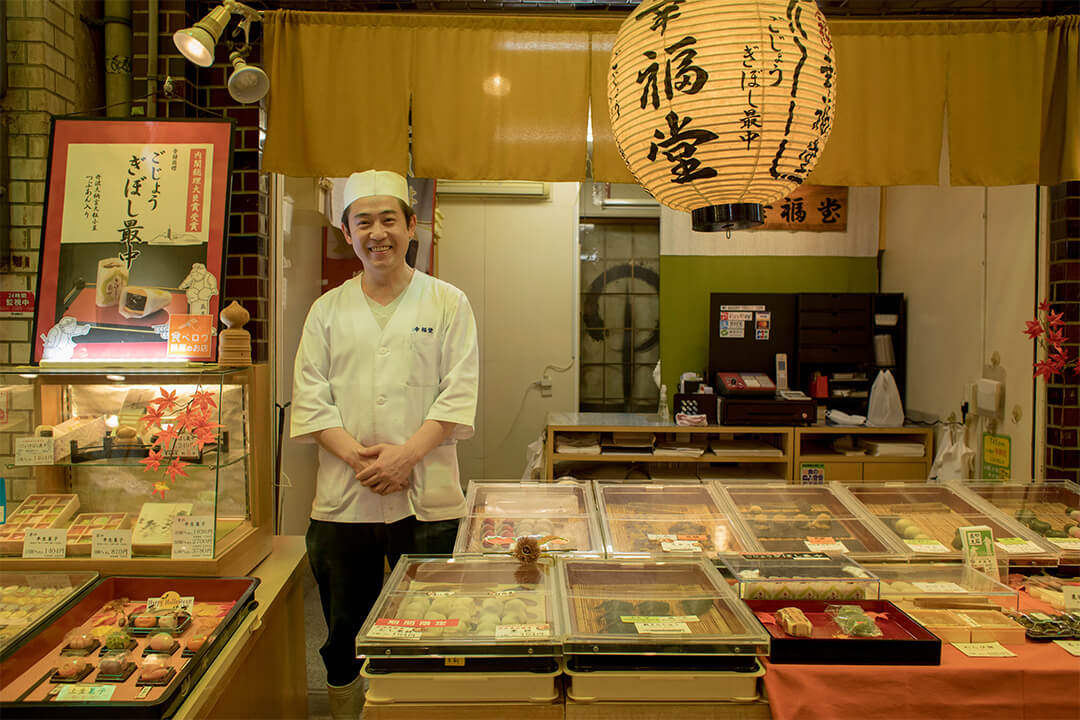
A delicious sight. This is a storefront that fits such words. Kyoto is a city that places great importance on the customs of each season. You can feel and taste Kyoto with sweets associated with these customs. Kofukudo, founded in 1868, has had its main store near the Gojo Ohashi Bridge (now Matsubara Bridge) for 150 years. The specialty Gojo Giboshi Monaka is a monaka made in the motif of a giboshi (a type of ornamental finial used on Japanese railings) decorating the parapets of the Gojo Ohashi Bridge.
- Japanese Confectionery