
All shops
128件Please note that business hours and regular holidays may have changed.
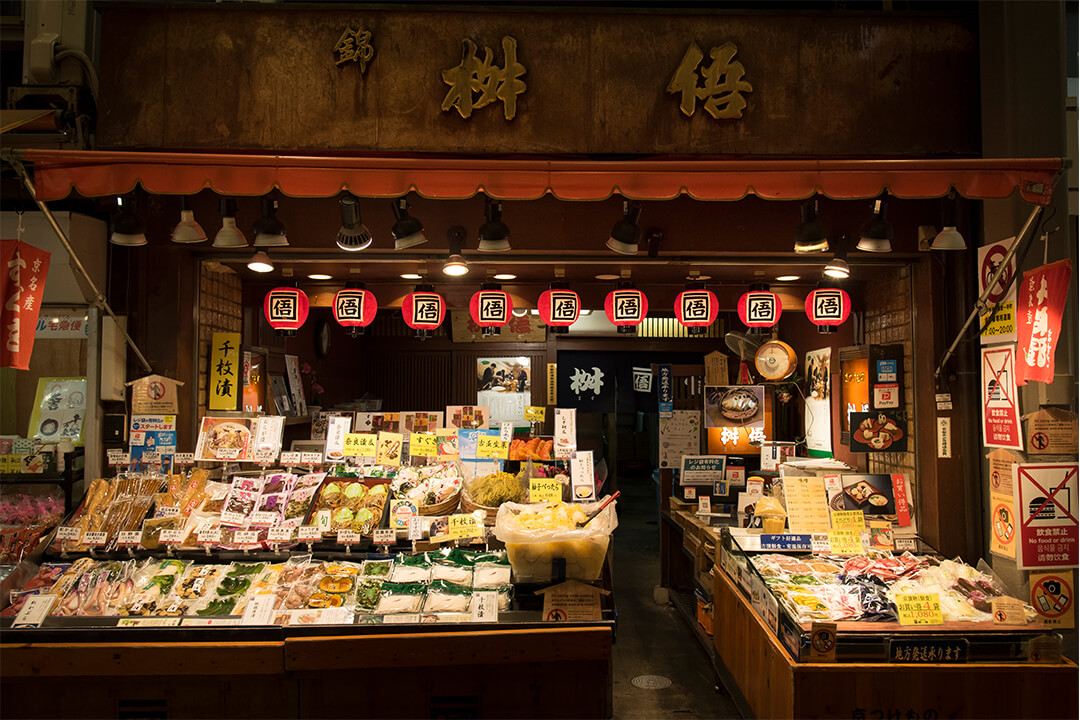
Masugo North
The shop’s name is derived from the sake brewing business that they operated in the mid-Edo period(1603-1867) in Nishikyogoku, Kyoto. The current business of producing and selling Kyoto pickles began in 1930. They have three shops in Nishiki Market, and this store, the North Shop, features everyday products such as sweet-and-spicy takuan radish and pickled mibuna green, fermented products such as white miso, and commercial products for restaurants, hotels, and ryokan (Japanese-style inns).
- Kyo Pickles
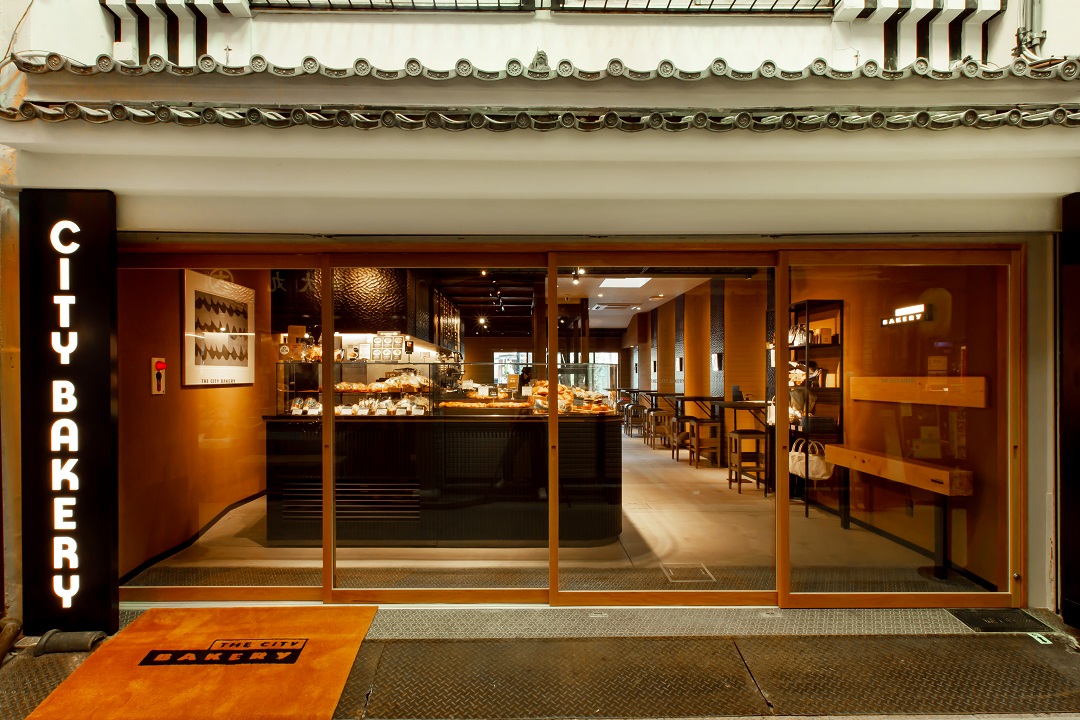
THE CITY BAKERY Kyoto Nishiki St.
This is a bakery from New York City. Founder Maury Rubin has a unique background as a TV producer, and his creative pretzel croissants and hot chocolate are popular. At the Kyoto Nishiki St. Shop, the bakery offers a wide variety of products every day, including fifty to sixty different kinds of breads, pastries, and cakes made by the bakers and pastry chefs’ original recipes and some are available only in Kyoto.
- Café & Bakery
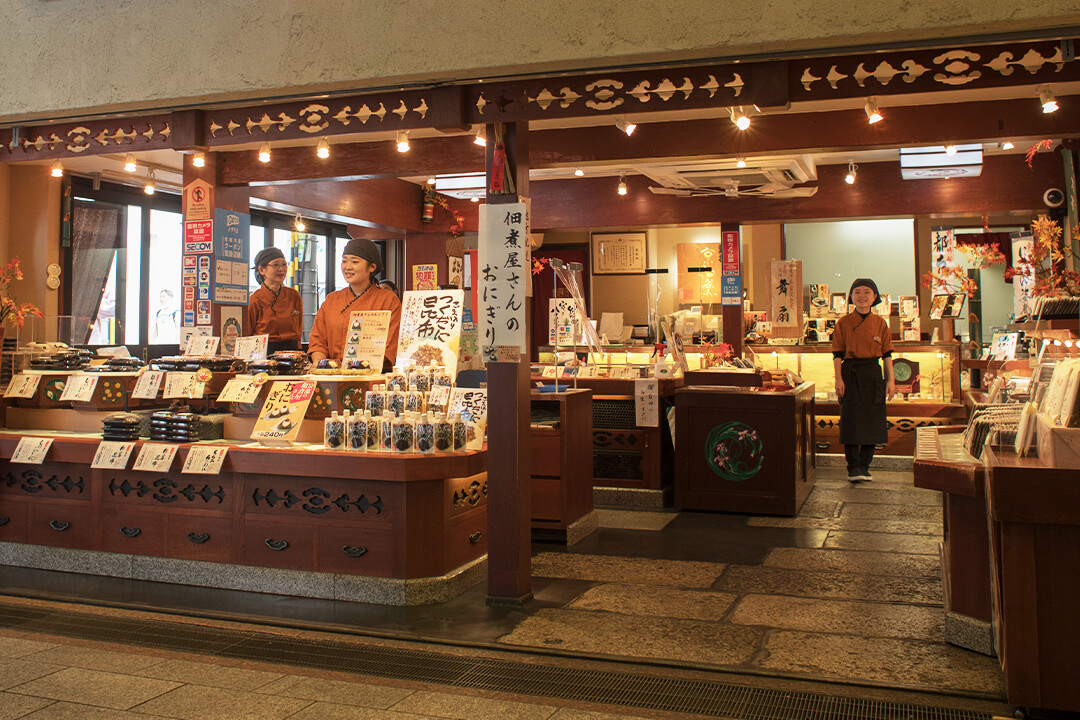
Nomura Tsukudani
Nomura Tsukudani has an ample selection—about 100 kinds!—of tsukudani (food boiled in soy sauce). There are also products sold by weight for home use. Nomura Tsukudani has inherited the tradition of carefully making various products little by little since their early days when they were a delicatessen, which was still rare at the time.
- Kyo Tsukudani
Maruyata
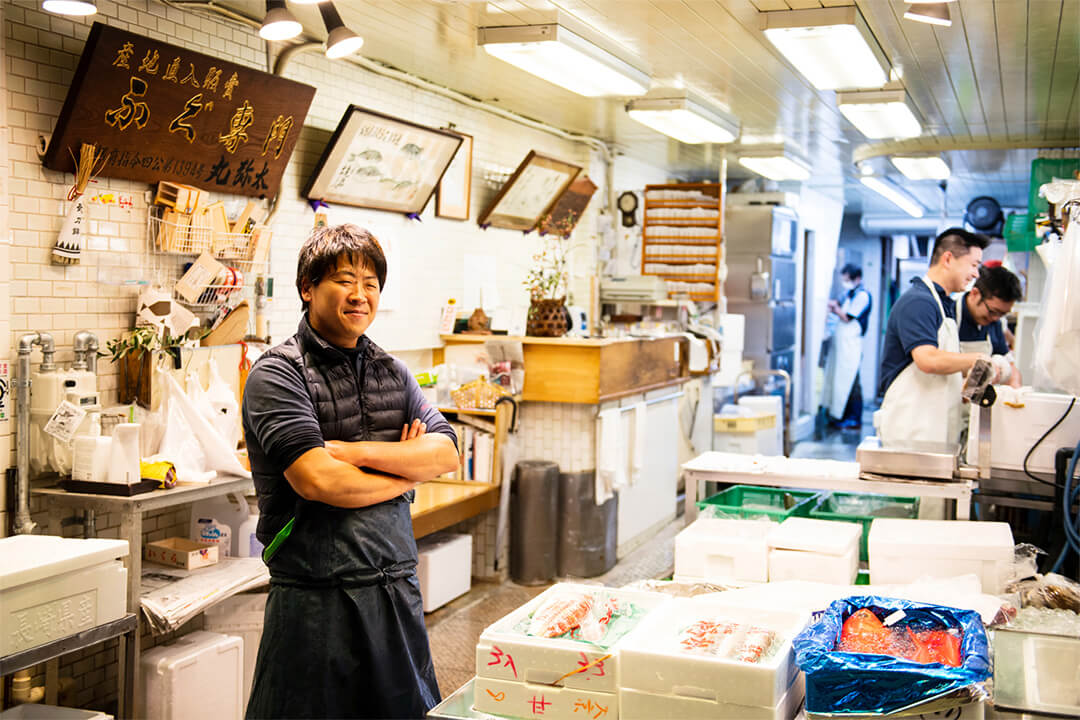
This shop's customers include Michelin Guide restaurants, long-established ryokan (Japanese-style inns), and famous ryotei (Japanese-style restaurants). Their main product is live fish swimming in fish tanks at the back of the store. The storefront is lined with fish that are about to be sent to customers in Tokyo, other parts of Japan, and even overseas. This popularity is due to the shop's unique preparation techniques, such as ikejime (a method of preparing live fish that maintains the quality of its meat).
- Fresh Fish
Notoyo
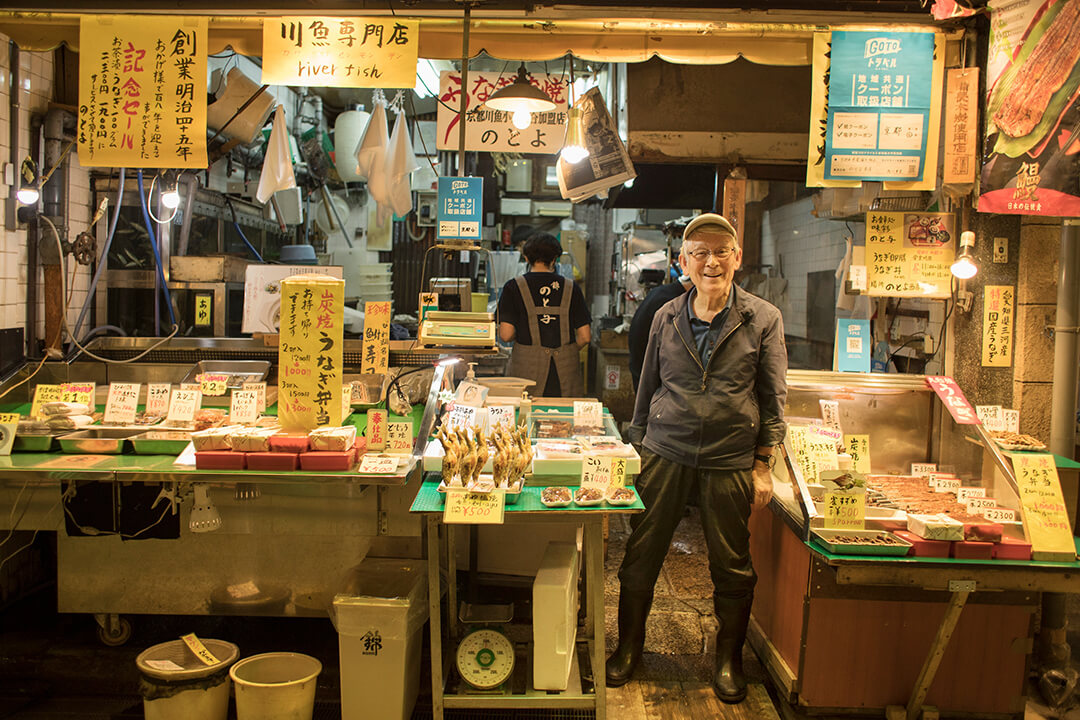
This is a shop specializing in river fish, of which there are only a few in Kyoto and only three in Nishiki Market. The products lined up in the store are fileted, cut into chunks, and cooked in large pots in the back of the store, where they also prepare products for wholesale delivery to kaiseki restaurants.
- River Fish
Fufusa Rouho
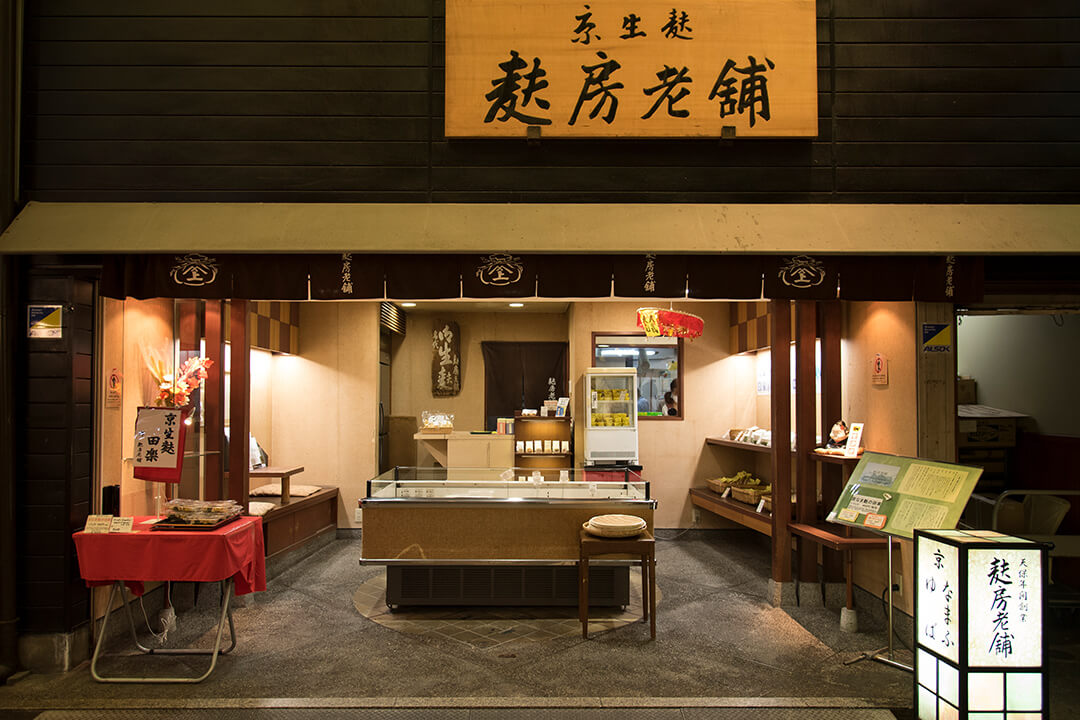
This is a specialty store of Kyoto-style nama-fu (raw cakes of wheat gluten used in cooking. Unlike most fu in Japan that are sold as dried products, in Kyoto, they are often used in the form of soft, chewy cakes.) that manufactures, wholesales, and retails fu at this location. The store dates back to the Tempo era (1831-1845). It sells a variety of fu, including shiro (white), awa (millet), and yomogi (Japanese mugwort). Other products include "fu dengaku" (fu seasoned with dengaku miso) and "fu manju" (an aonori seaweed fu bun filled with red bean paste).
- Namafu
Aritsugu
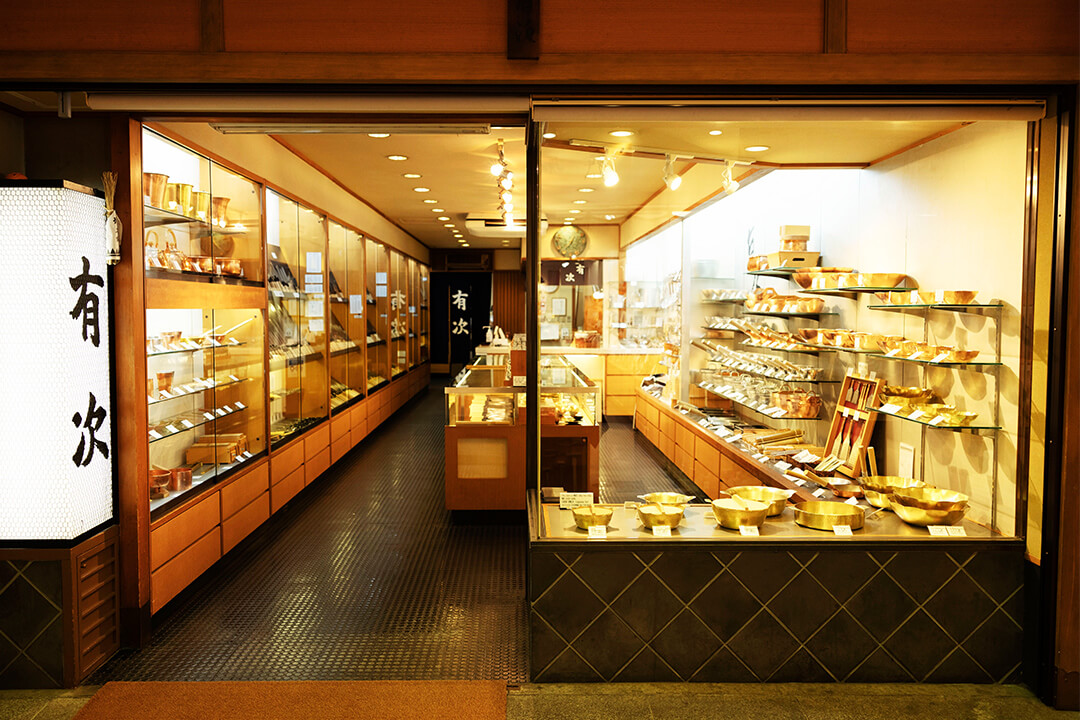
This shop has a long history dating back to 1560 when it was originally founded as "Swordsmith Fujiwara Aritsugu." In the shop, an impressively wide variety of knives, pots, and other cooking utensils handmade by skilled craftspeople are lined up as if reflecting the long history of the store. It is supported by a wide range of customers, from top chefs of Kyoto cuisine to ordinary households.
- Knives,Cooking Utensils
Tsunoya
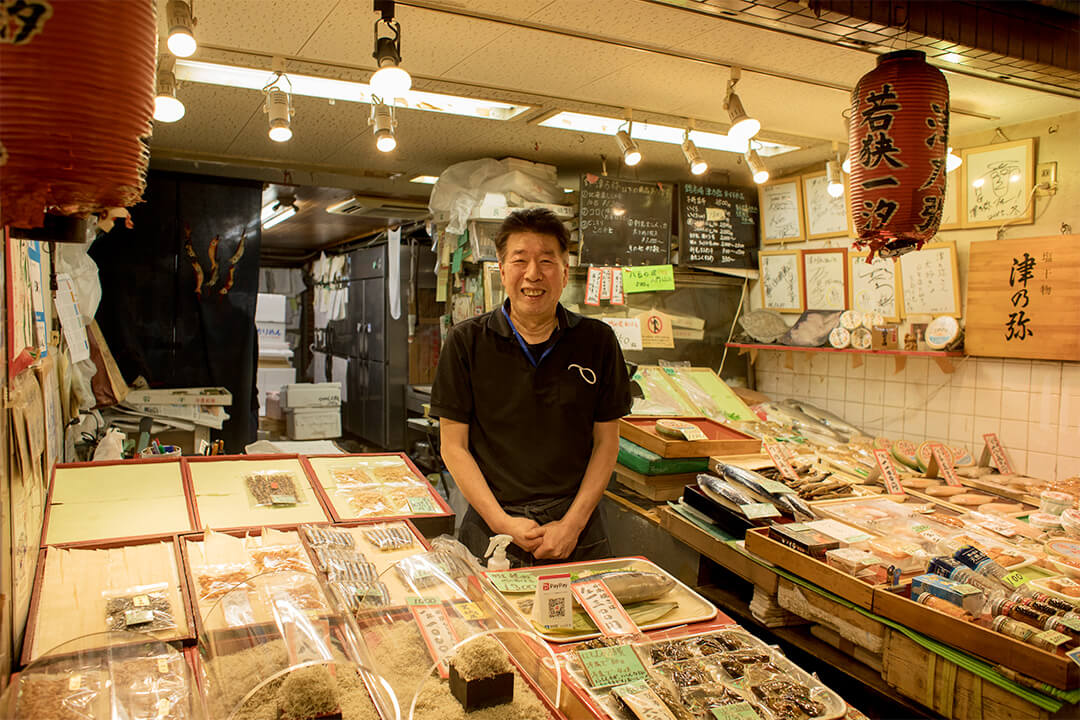
With the motto of "always procuring fish in the best condition," this store has been in operation since 1928. It is now run by its third-generation owner and has been in business for over 90 years. They deal in salted and dried fish, and their main products are chirimenjako (dried baby sardines), guji (tilefish), and overnight-dried flounder and barracuda. They are especially particular about Wakasa seafood and delicacies such as heshiko (fermented fish) and Wakasa flounder.
- Wakasa
Leg Yasuda
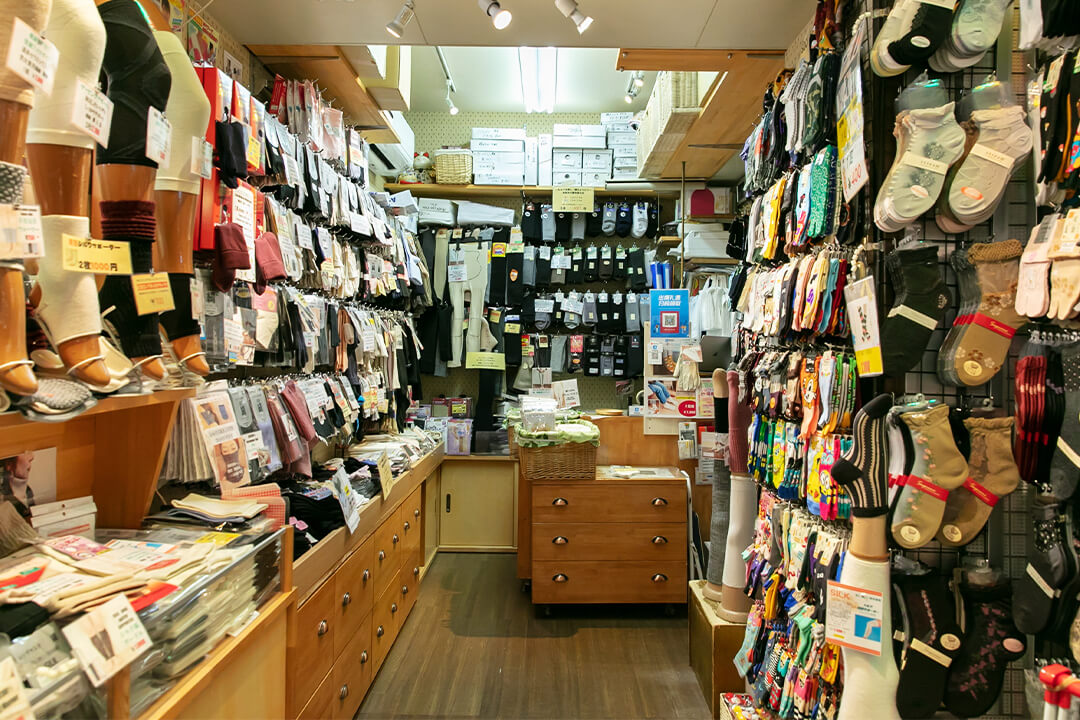
“We deal in health-related products such as socks, knee support bands, thermal undergarments, and other products made of carefully selected materials,” they say. “Our products are carefully manufactured at factories mainly in Japan to please our customers. Among our natural fiber products, our silk products are cool in summer and warm in winter, and have excellent moisture retention properties. We are particular about materials and knitting methods, and recommend products that provide the comfort that cannot be felt with synthetic fibers.”
- Socks
Azumaya
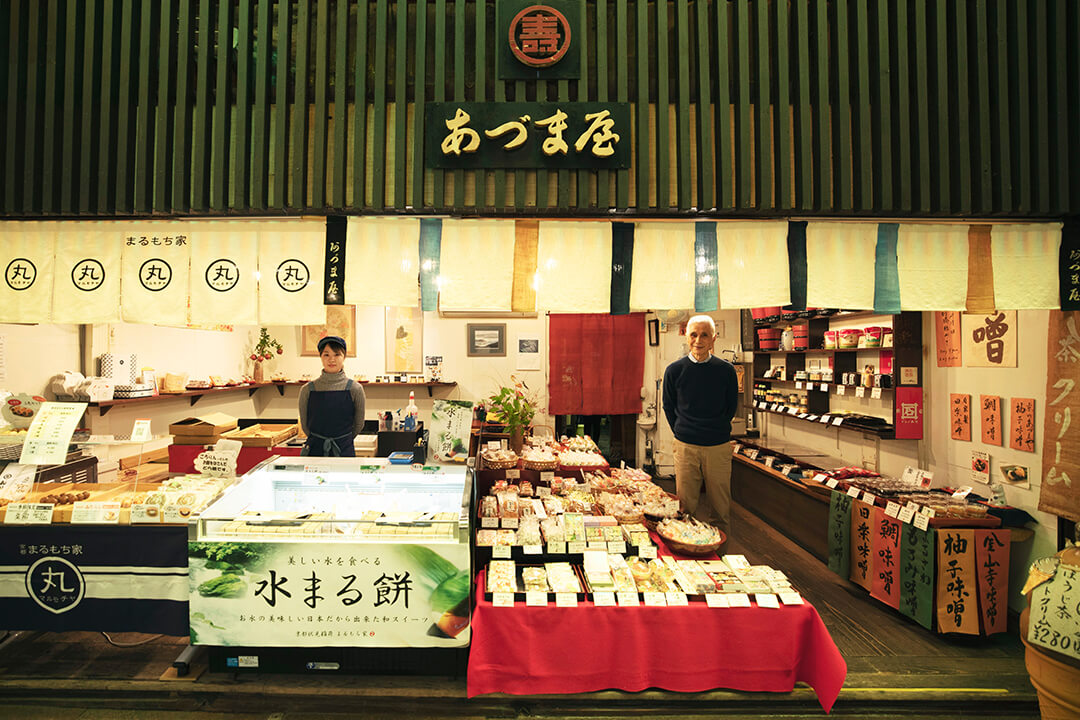
The owner's desire to "cherish the atmosphere of Nishiki Market" can be felt in the plaster walls and the interior using lots of wood. The shop is passionate about sourcing sweets produced in Kyoto and sells cute sweets in small portions, making it a fun experience to shop there. It is exciting just to look at the kohaku-to (confection of brightly colored, melted agar-agar), which are like jewels that you can eat. Their lineup of dry confections made with wasanbon sugar changes with the seasons.
- Old-fashioned sweets, Miso