
All shops
128件Please note that business hours and regular holidays may have changed.
Sugi Honey shop
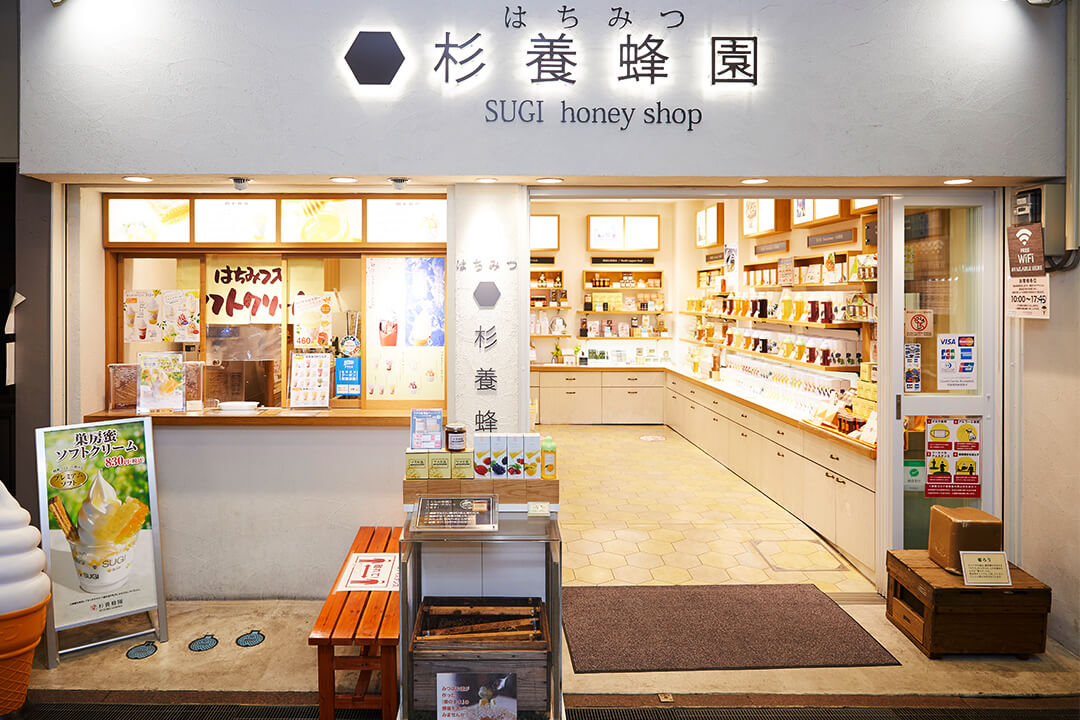
Honey is a gift of nature. Sugi Honey Shop raises bees in their own apiary in Kumamoto Prefecture and also collects honey from all over Japan. They sell pure rich honey, fruit juice blended with honey, royal jelly, propolis, the New Zealand manuka honey, which has been gaining attention in recent years for its health benefits, and more. Their lineup of honey products are loved by people of all ages.
- Honey
Kawaichi
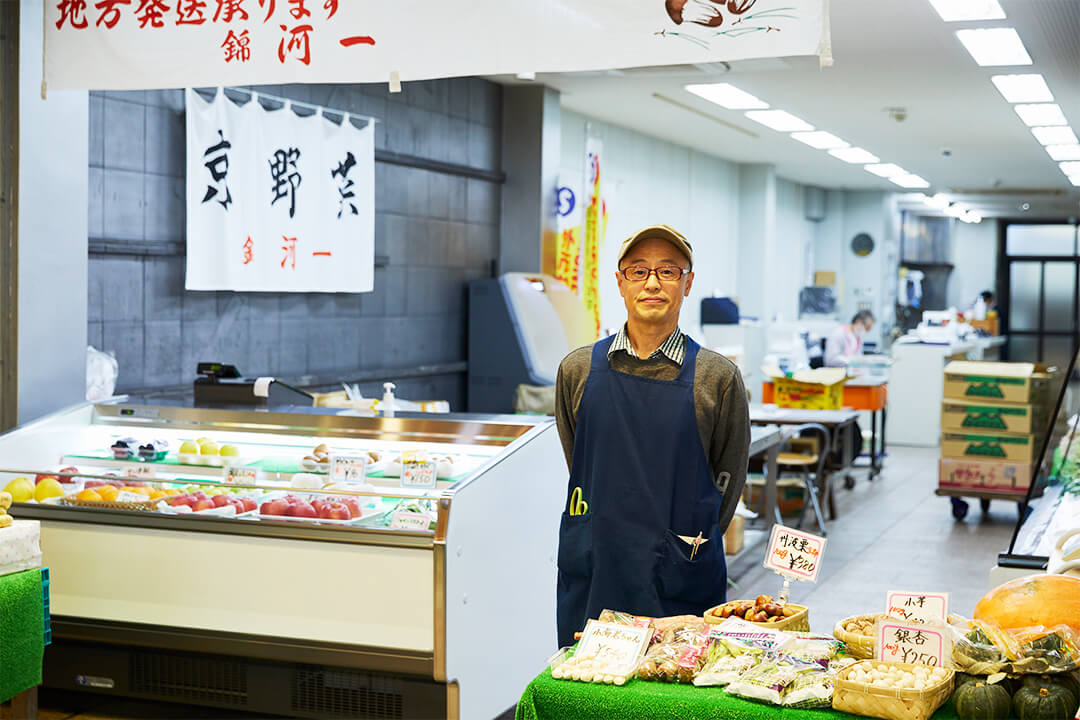
“I can't introduce something I haven't eaten,” the owner says. He makes sure to eat the produce he sells to become knowledgeable about it. Conversation at the storefront, the point of contact between people, is the crux of this kind of business, so the owner makes sure to have a knowledgeable person standing in the shop. He says that the staff in the storefront will always be a personable veteran greengrocer, so people should feel free to ask any questions they may have.
- FreshFruits,Vegetables
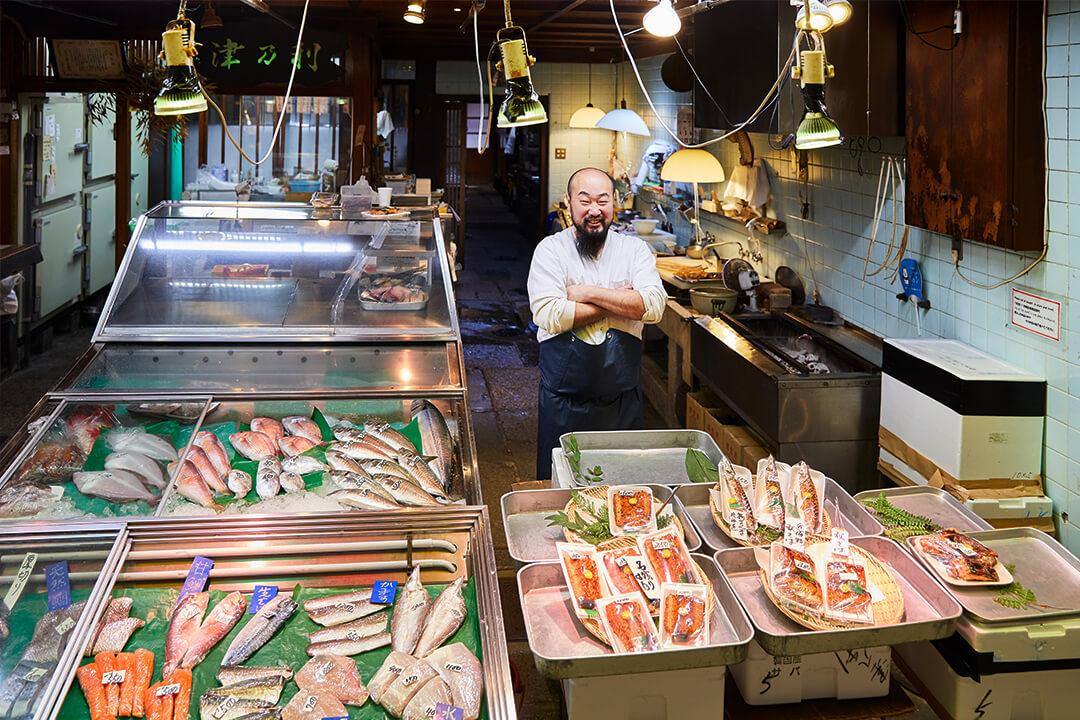
Tsunori
This shop has a long history. It was founded as a caterer in the late Edo period(1603-1867). After WWII, it became a fresh fish merchant, and now, with its ninth-generation owner, it is a fresh fish and charcoal grill shop. In addition to sashimi and fillets, the charcoal grill, which utilizes the facilities from the time when the shop was a caterer, is very popular. The sight of their lively grilling of sea bream, mackerel, yellowtail, saury, and other fish is sure to whet your appetite.
- Fresh Fish
Uoriki
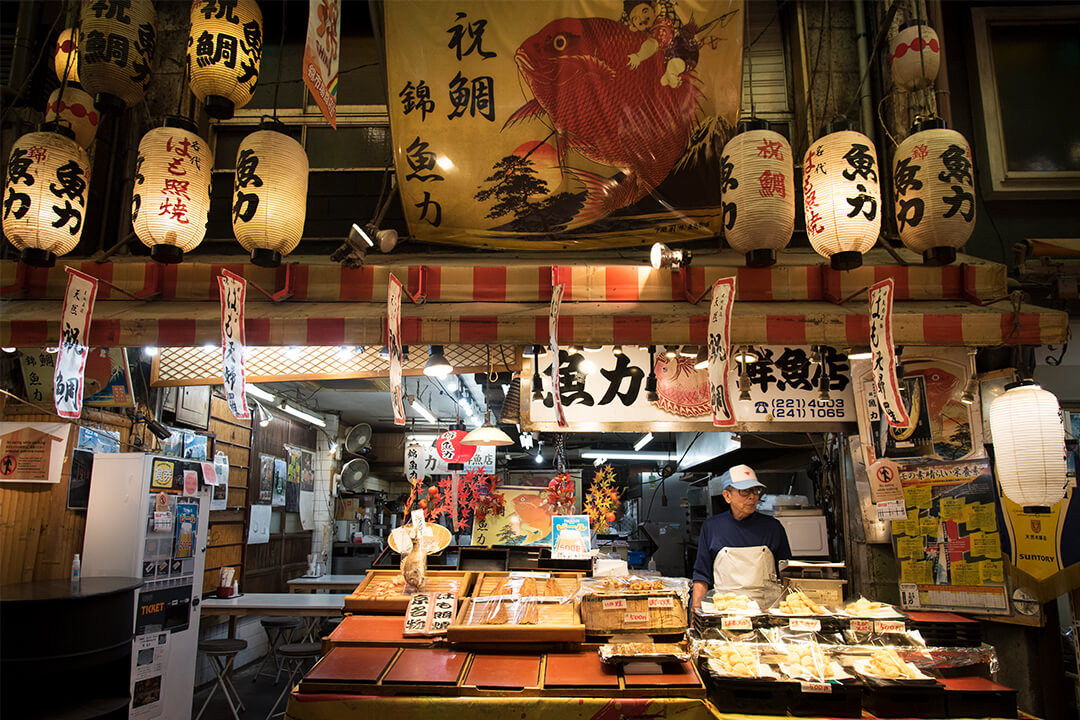
This shop has been specializing in grilled fish since 1919. The shop is filled with the delicious aroma of grilled fish. Their focus is sea bream and hamo (pike conger eel). They especially recommend the ornamented sea bream for celebrations, grilled hamo, and the hamo tempura and hamo katsu (hamo cutlet), which can be eaten right in the shop. For those who need it, they also ship the celebratory sea bream to other parts of the country.
- Grilled Fish
Masugo Main store
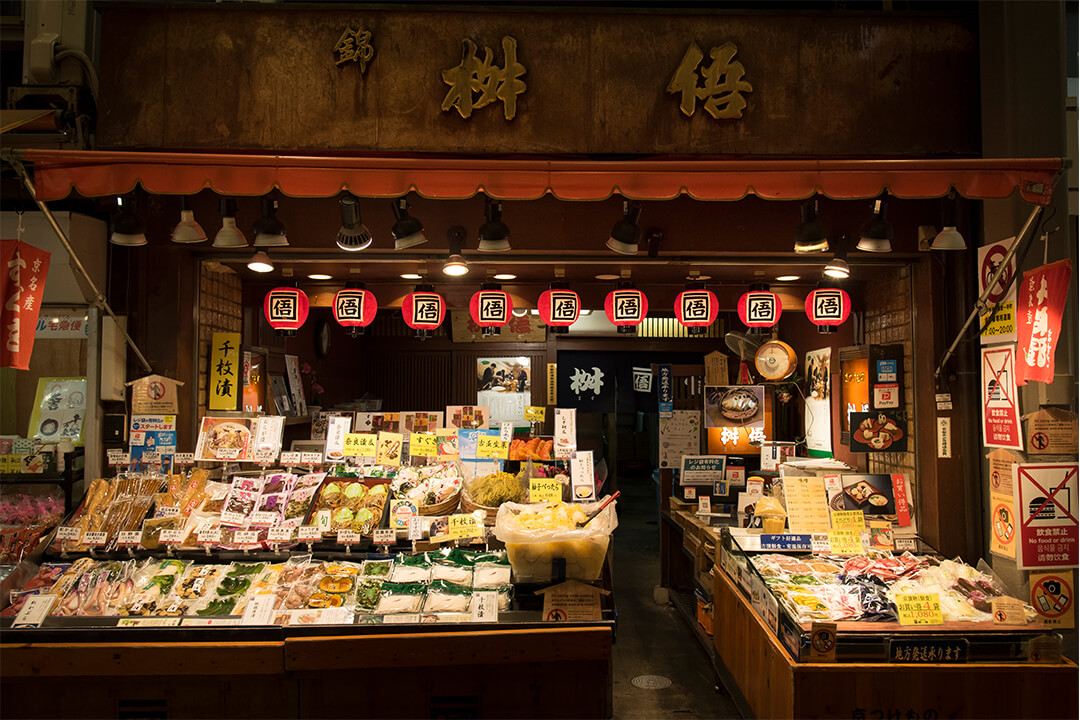
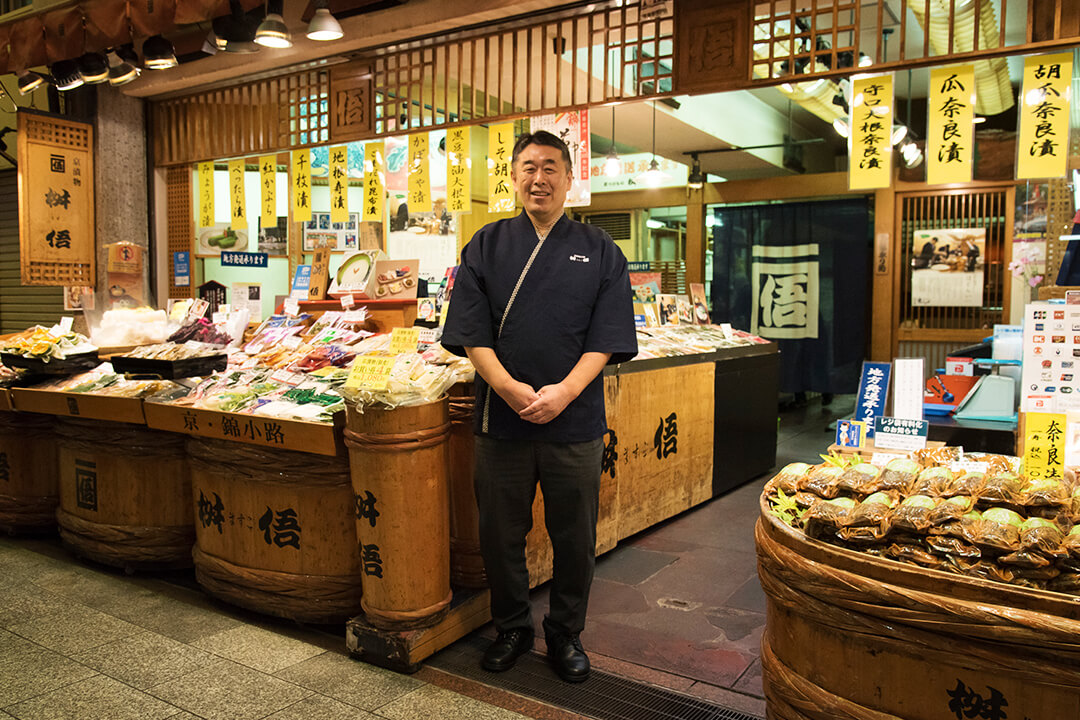
The name “Masugo” has been passed down since they were a brewery operated in Nishikyogoku, Kyoto in the mid-Edo period (1603-1867). It was in 1930 that the company became the current manufacturer and seller of Kyoto pickles. They have three stores in Nishiki Market, and the Main Shop is large enough to offer a wide range of products from daily items to souvenirs and gifts. They are particular about ingredients and production methods, and make their pickles every day at the back of the shop.
- Kyo Pickles
Tsubakiya
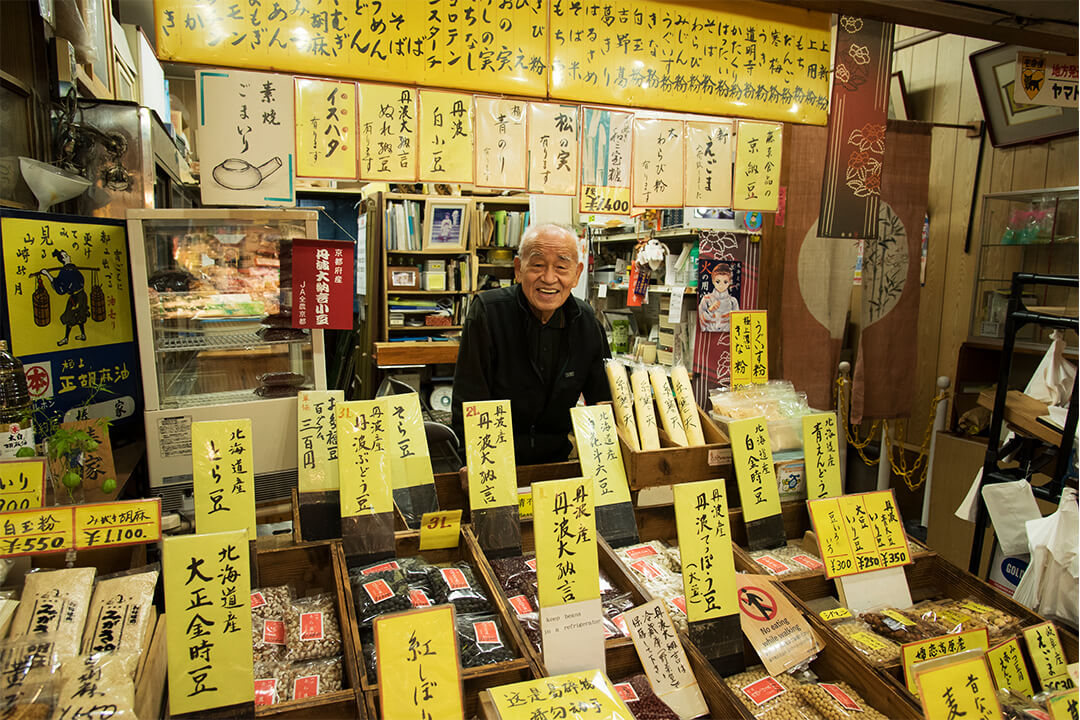
“Since we have a shop here at Nishiki Market, we want to demonstrate the advantages of face-to-face sales.” The shopkeeper gives customers a piece of paper with recipes on how to boil beans and other ingredients, and he also teaches how to preserve them. He also has a research-oriented side, learning various other methods of cooking and preparing that are in line with the times. He loves to talk, so you can ask him anything.
- Beans and cereals
Karikari hakase
This popular takoyaki shop has a line of people waiting in front of it anytime one passes by. Why are there so many couples? Perhaps it is because the young and cheerful staff makes it easy to enter the shop. That may be one reason, but it may also be because of the delicious and reasonable price (280 yen for one pack of takoyaki). The crunchy takoyaki live up to the shop’s name (“kari kari hakase” ≈ “Doctor Crunch”).
- Takoyaki
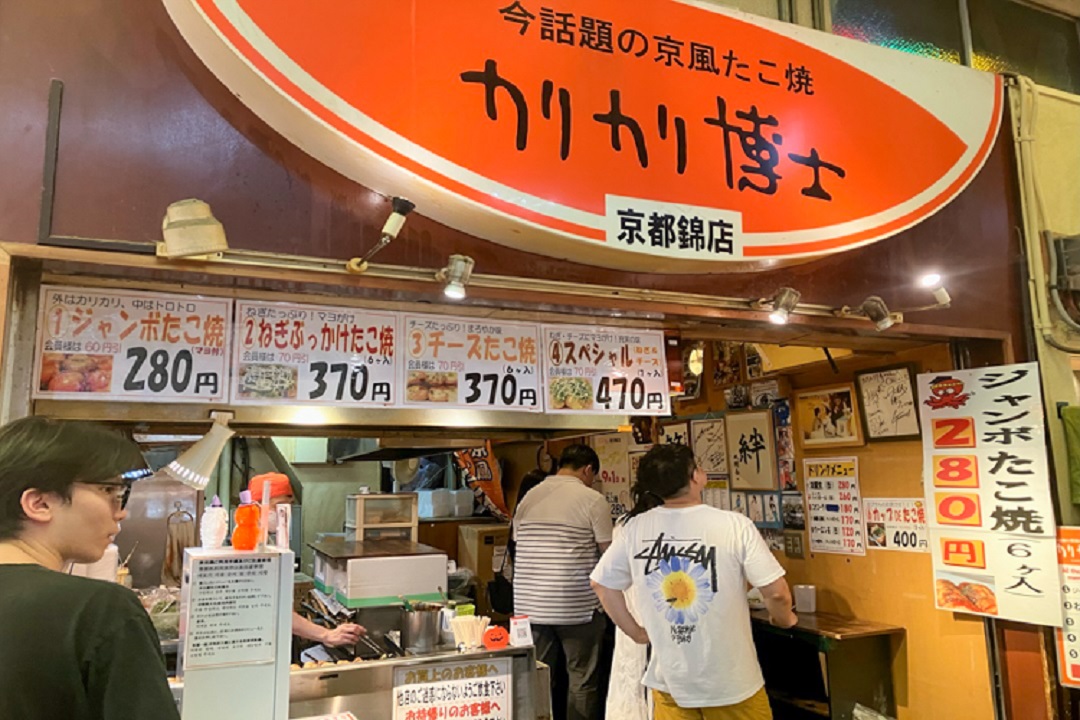
Kyo Tsukimachian West
This shop specializes in an unusual pastry called "Fuku-Daruma Anesu.” "Anesu" is based on the sound of a Portuguese word for baked sweets. It is actually a word that has been used for a long time in Japan, although not many people are familiar with it. The ingredients are flour, sugar, and eggs. The surface is baked to a smooth firmness, and the face of Daruma (a Buddhist saint) and the word "fuku," meaning "good luck," are branded on it. Hence, “Fuku-Daruma Anesu.” The texture is crispy, like a Japanese "bolo" cookie, which also happens to be derived from a Portuguese pastry.
- Rice crackers
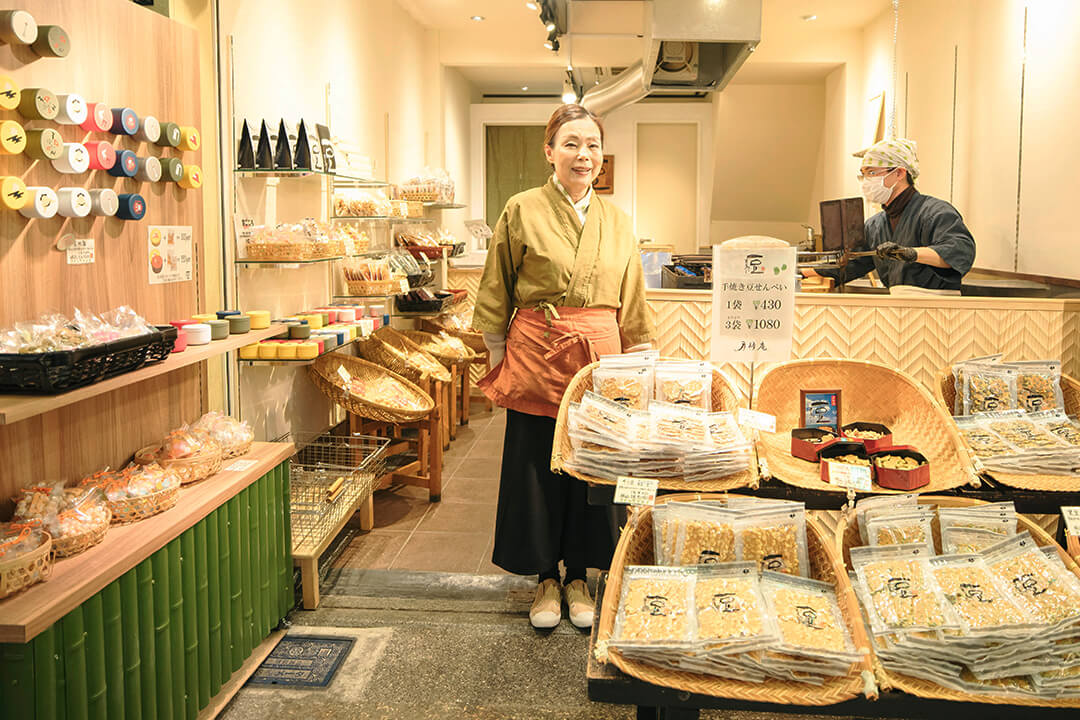
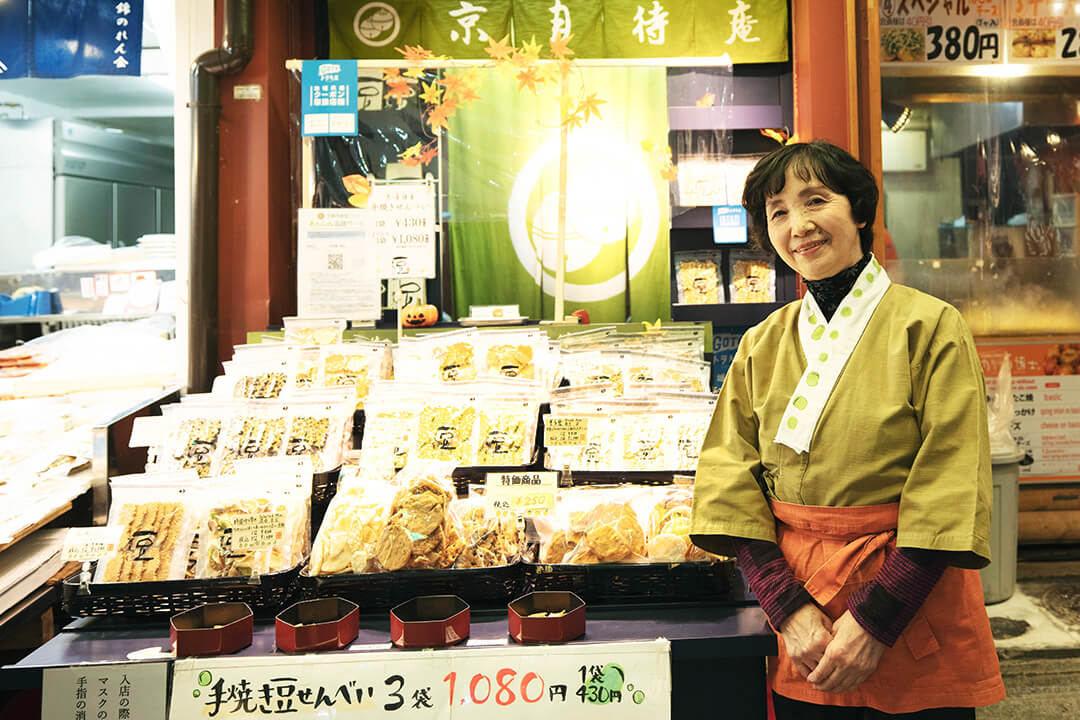
Kyo Tsukimachian East
This Kyoto sweets and snack shop is nostalgic yet novel. The main product is hand-baked rice crackers. The store has inherited the tools and techniques of hand-baking from a store founded at the end of the Edo period (1603-1867), and makes rice crackers by hand without using any machines. Their mamesenbei (rice crackers with beans in the dough) uses black soybeans, green peas, peanuts, and even pumpkin seeds in addition to the most popular broad beans.
- Rice crackers
Masugo North
The shop’s name is derived from the sake brewing business that they operated in the mid-Edo period(1603-1867) in Nishikyogoku, Kyoto. The current business of producing and selling Kyoto pickles began in 1930. They have three shops in Nishiki Market, and this store, the North Shop, features everyday products such as sweet-and-spicy takuan radish and pickled mibuna green, fermented products such as white miso, and commercial products for restaurants, hotels, and ryokan (Japanese-style inns).
- Kyo Pickles